 Nearby
Auckland
Cordis, Auckland by Langham Hospitality Group
9.0· 5,903 reviews
approx. from£331 / nightSee prices
The Auckland issue
A 12-minute crossing from downtown, Devonport trades Auckland’s rush for volcanic summits, heritage streets, seawall walks and a quietly excellent food scene.

By Mere TuionoBlack-sand surf and volcanic-cone dawns
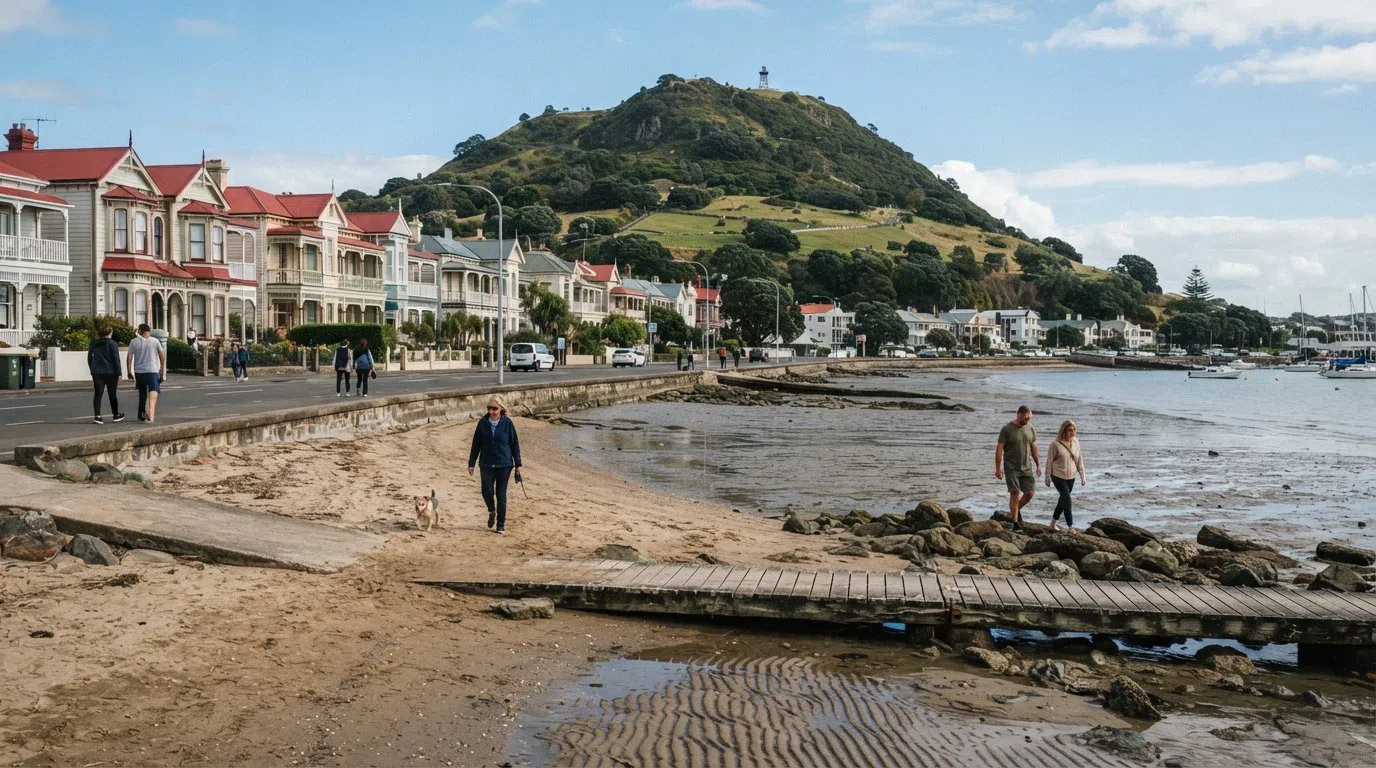
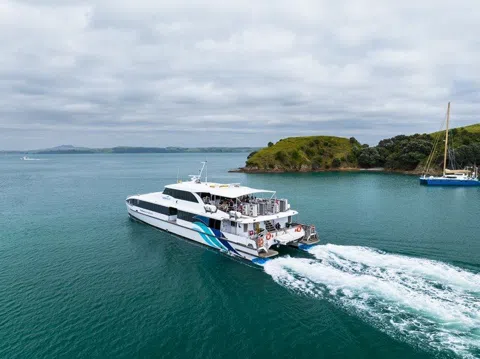
The ferry noses into Devonport Wharf in about 12 minutes, and the city changes before your feet even hit land. Auckland’s glass towers sit across the Waitematā like a painted backdrop; here, the loudest thing is often a gull, and the first pull is not toward a taxi rank but up Victoria Road, past old shopfronts and kauri villas with wrought-iron verandahs.
Devonport is one of those rare central places that remembers to stay small. It sits between two extinct volcanic cones, with the harbour on one side and the sea-facing headland on the other, and the whole village seems arranged to make you slow down. You can come for a half day, absolutely. But the place rewards lingering: a walk to a summit, a long lunch, a wander through the galleries and chocolate window, then an early drink before the last light slips across the water.
Two things define Devonport, and both are visible from the wharf before you’ve taken ten steps. The first is the ferry itself — the little crossing from the Downtown Ferry Terminal (Pier 1) that runs every 15–30 minutes and costs roughly NZ$7.80 one way with an AT HOP card or contactless, about NZ$12 on a paper ticket. The second is the pair of tūpuna maunga that bookend the village, giving Devonport its shape and its mood.
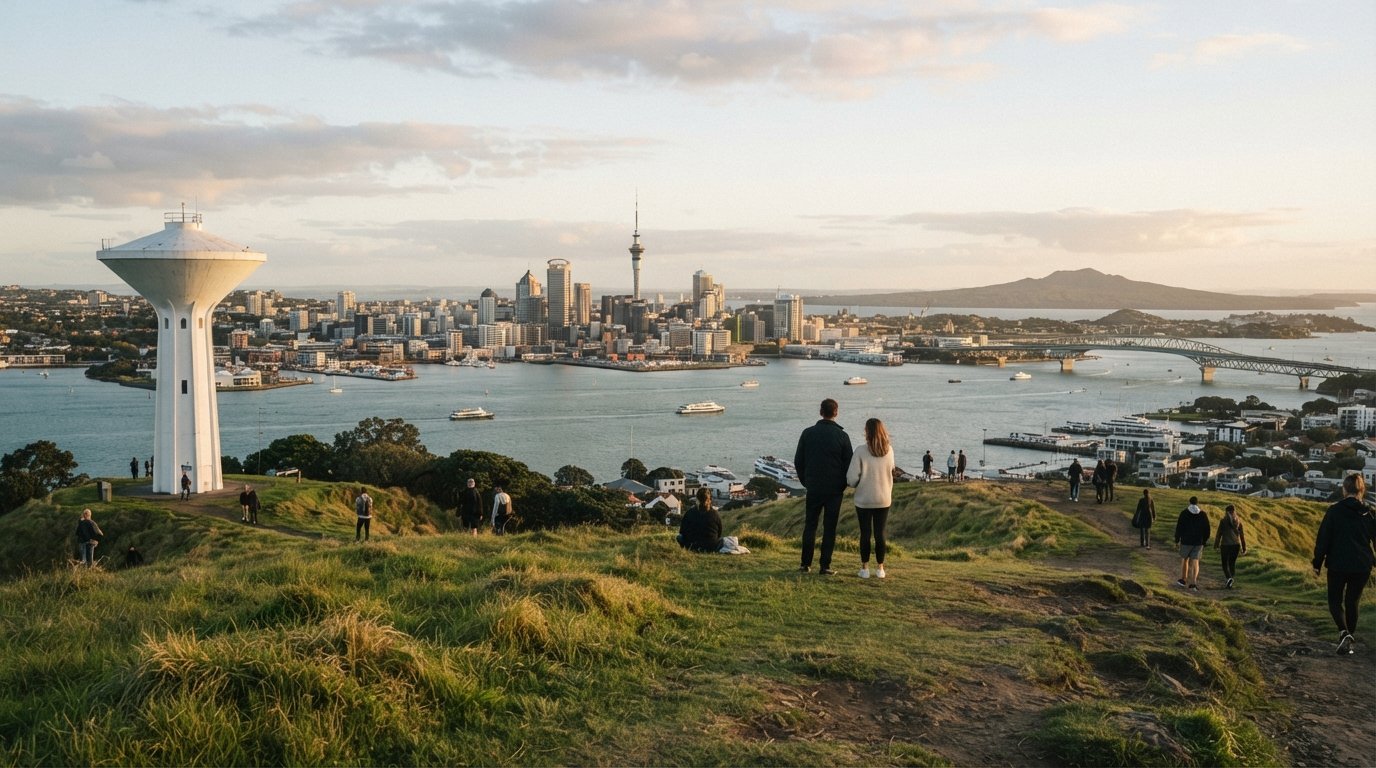
Takarunga / Mount Victoria rises behind the village as a 66-metre cone, highest on the North Shore, and the climb is short but properly steep near the top. The reward is a 360-degree panorama: the city skyline, the harbour bridge, Rangitoto, ships moving in and out, and those curious brightly painted mushroom caps that turn out to be ventilation shafts for a reservoir hidden inside the hill.
On the other side, Maungauika / North Head is more atmospheric. It is the seaward cone, a place of tunnels, searchlight emplacements and the 1886 disappearing guns built when Auckland feared a Russian invasion. You can walk through the tunnels, torch in hand, and feel the temperature drop as the hill swallows you. Above ground, the reserve is all views and weather — the kind of place where you stand still because the harbour keeps moving.
Devonport’s other defining feature is that it never quite tried to become anything else. The village has a walkable heritage high street, two swimming beaches, and one of the country’s oldest cinemas. It feels genteel without tipping into stiffness. Long-settled locals walk dogs along the seawall. Weekend visitors arrive from the ferry with ice creams in hand. Hospitality people, some with a Melbourne sensibility, have quietly raised the food game. By late afternoon, the wine bar and courtyard cafes fill with people who are in no hurry.
Live prices from our booking partners.
Free cancellation on many rooms. We may earn a commission when you book.
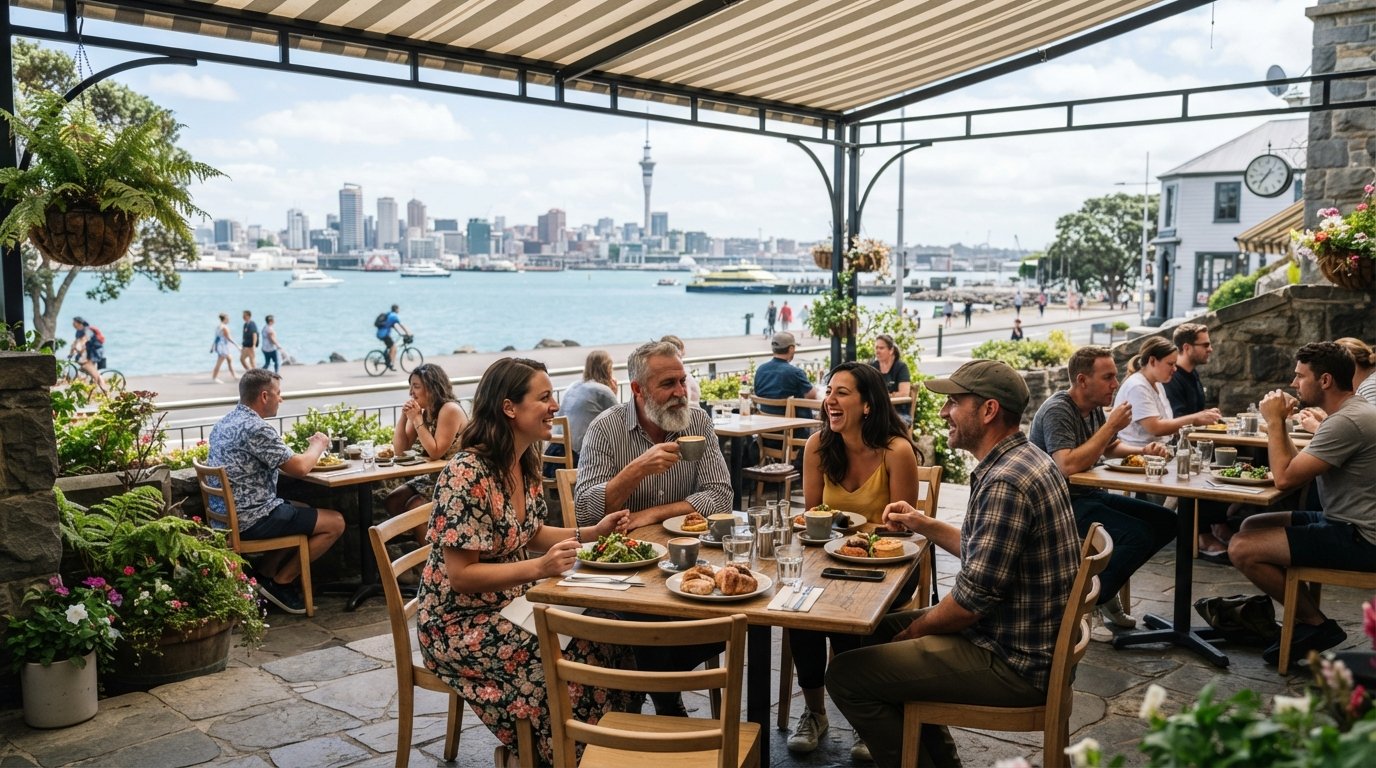
For a place this compact, Devonport eats very well. The standout for a long, harbour-facing meal is Dulcie at 33 King Edward Parade, an airy all-day eatery with a canopied courtyard looking straight over the water at Torpedo Bay. It is the sort of place that understands the pleasure of sitting still. Brunch can mean truffle scrambled eggs or an eggs benedict built on a cacio e pepe hash brown with burnt-butter hollandaise, and the coffee is Atomic. The wine list is all New Zealand, which suits the setting: clean air, salt water, and a table looking out to the bay.
For dinner, Vic Road Kitchen on Victoria Road is the local special-occasion room, rustic-Mediterranean and serious about the plate. The menu changes daily, which means you might find wood-roasted whole flounder, squid-ink spaghetti or wood-fired green-lipped mussels. It has the kind of reputation that comes from being consistent rather than loud, and the NZ Herald’s Viva gave it 17/20.
A few doors and corners away, the tone softens without losing quality. Manuka, on the corner of Victoria Road and Clarence Street, is a heritage-building institution with wood-fired pizza and Mediterranean plates served all day. Corelli’s at 46 Victoria Road is the courtyard cafe with fresh flowers, French windows and free live music most Sundays, the sort of place where lunch can quietly become an afternoon. Stone Oven Bakery & Cafe, in the old telephone exchange at 5 Clarence Street, adds thick brick walls, home-baked breads and pies, and the reassuring smell of something baking behind the counter.

Then there are the neighbourhood regulars that make Devonport feel lived-in rather than curated. Buona Sera has two decades of Italian under its belt. The Flying Rickshaw is well-regarded for Indian, dine-in and takeaway. Danryu specialises in sashimi, sushi and fresh seafood. Vondel leans into seasonal cooking with natural wine and craft beer, and it carries that mood into the evening. And Devonport Chocolates, established in 1991, lets you watch the chocolatiers at work through a viewing window — one of those tiny pleasures that can turn a quick browse into a necessary detour.
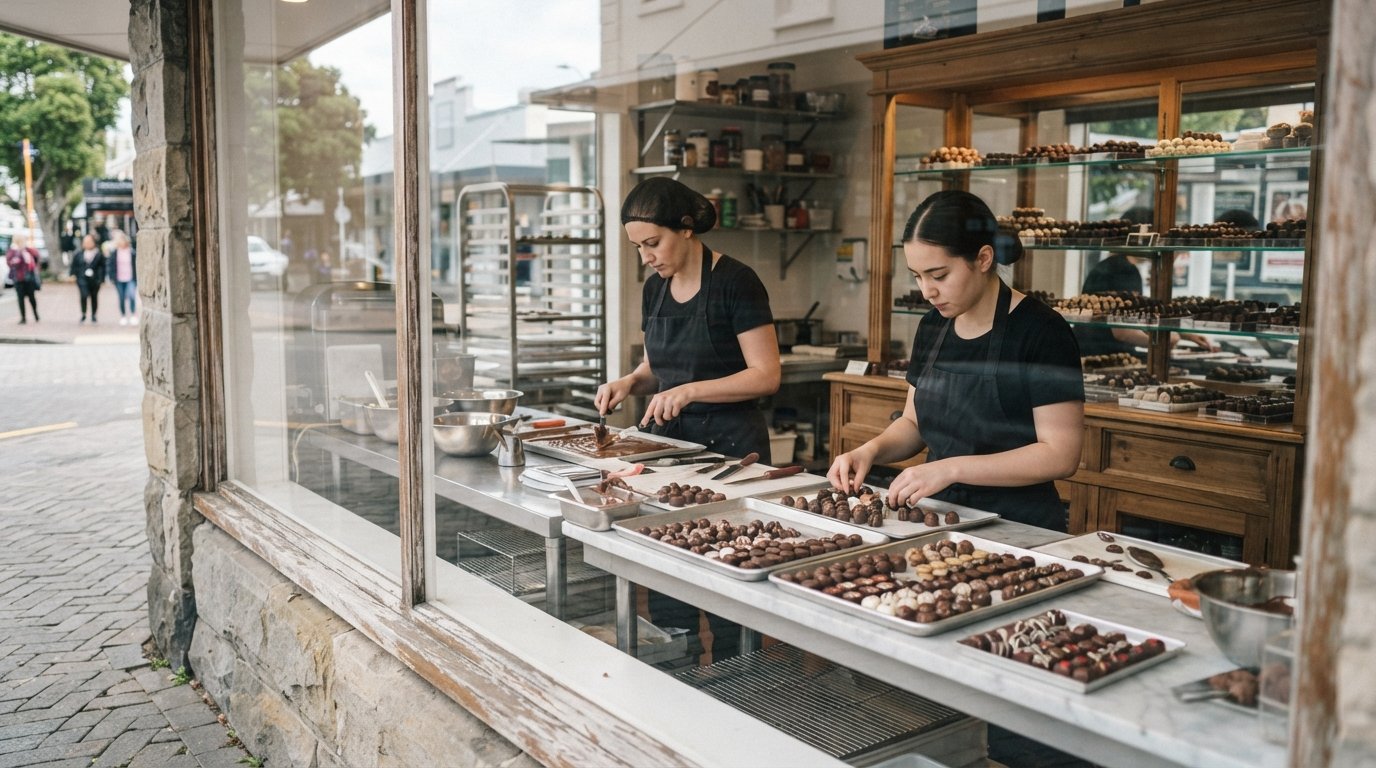
Devonport does not pretend to be a late-night district, and that is part of the charm. The evening rhythm is drinks-with-dinner, not dancing-till-dawn. By the time the light softens over the harbour, the village seems to exhale.
The best place to start is Vic Road Wine Bar & Cellar, an old shoe shop reinvented as a bar-plus-bottle-shop with a European-style courtyard. It is open Tuesday to Sunday from midday until late, and the appeal is simple: rotating wines by the glass, tap beers, and the option to pull any bottle from the retail shelf and open it on the spot. There is something pleasingly unpretentious about that. It feels like a neighbourhood room that also happens to know its wine.
The Esplanade Hotel, the grand 1903 waterfront landmark by the wharf, is the other anchor. It is where the village gathers after work, at the bar and restaurant, and it has the sort of presence that comes from being there long enough to belong to the shoreline. Vondel keeps its natural wine and craft beer going into the evening, while Manuka has a proper bar alongside the restaurant. If you want clubs and live venues, you ferry back to the city. Britomart, the Viaduct and K’ Road are where Auckland stays up.
Start with the two headlands, because Devonport makes most sense from above. Takarunga / Mount Victoria is the easy first climb, about 15–20 minutes from the village via Kerr Street, and the view at the top is the kind that resets your sense of distance. The skyline is close enough to name. The harbour bridge sits where it should. Rangitoto floats beyond. Ships come and go in the channel, and the village below looks like a model arranged by someone with a soft spot for heritage.
Maungauika / North Head is the more dramatic walk. Its tunnels, searchlight positions and disappearing guns give the hill a memory that is both military and strangely intimate. Bring a phone torch. The underground chambers are cool and dim, and the sense of being inside the hill is part of the point. Above ground, the reserve opens to the sea and the city, and the whole headland feels like a place where history has not been polished away.
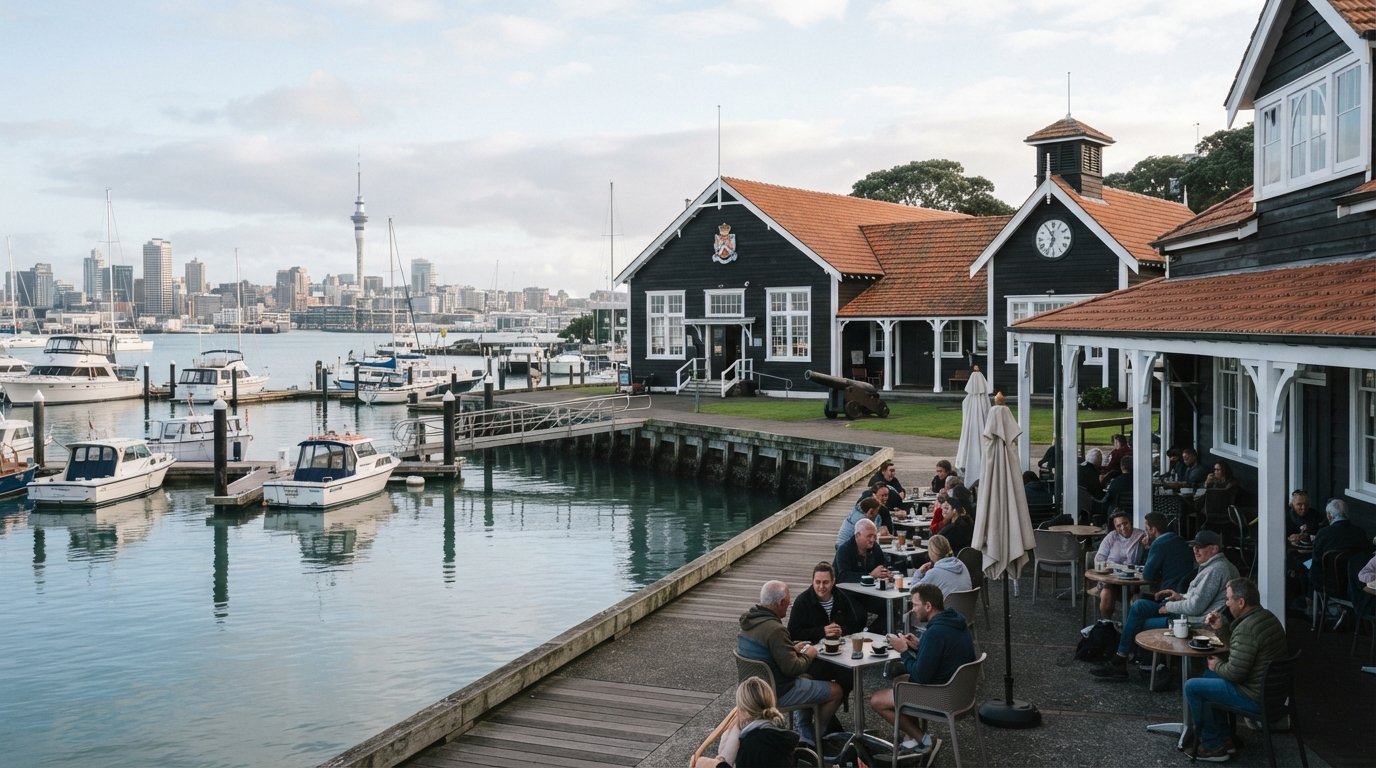
Down at water level, the Torpedo Bay Navy Museum tells the story of the Royal New Zealand Navy in heritage buildings on the waterfront. It is free for New Zealand residents, with a small charge for overseas adults, and it has a genuinely good cafe attached. People talk about the eggs benedict for a reason. It is the sort of museum that works because the setting is right: you are learning about the navy while hearing rigging clink in the bay.
For a rainy afternoon or an early evening, The Vic — the Victoria Theatre, opened in 1912 — is New Zealand’s oldest surviving purpose-built cinema. It has been beautifully restored and still screens films daily. There is a pleasure in going to the movies in a place that remembers how to do them properly, especially when the weather turns and the harbour wind starts to worry the windows.
The Devonport Craft and Fine Food Market takes over the village on the second Sunday of each month. It brings local makers, produce and baking into the streets, which feels entirely of a piece with the rest of Devonport: small-scale, neighbourly, and rooted in the idea that a village should have a centre. Victoria Road itself is also worth a slow wander. Galleries, gift shops, home-décor stores and secondhand bookshops all sit in those Victorian-era shopfronts, and the chocolate window is always there to pull you in.
Climbing Mount Victoria (Takarunga) for panoramic views of the city skyline.
Walking along the quiet sands of Cheltenham Beach.
Browsing the independent bookstores on Victoria Road.
Victoria Road is the shopping strip, though “strip” makes it sound more hurried than it is. You can cover it in a slow half hour, but it invites drifting. The shops are mostly independents — gift shops, homewares, a couple of fine-art galleries, secondhand bookshops and boutiques — all tucked into low-slung heritage frontages that make the street feel older than the city around it.
What Devonport is not, and does not need to be, is a retail destination for serious spending. If you want the big chains, you go elsewhere. Here, the pleasure is in the browse. A book you did not know you wanted. A print. A candle. A piece of pottery. Then the inevitable stop at Devonport Chocolates, where the handmade truffles and chocolates have been made in small batches since 1991, and where the viewing window turns confectionery into theatre.
Once a month, on the second Sunday, the Devonport Craft and Fine Food Market adds another layer. Makers, produce and baking spill into the village, and the whole place feels like it has briefly remembered its own scale.
Staying in Devonport is a deliberate decision. You trade the energy of the CBD for waterfront quiet, heritage streets and a village pace, with the city still only a 12-minute ferry ride away. That trade makes sense for couples, families and anyone who wants morning swims and calm evenings more than lobby bars and late check-ins.
The flagship is The Esplanade Hotel, the 1903 Edwardian landmark right on the foreshore by the wharf. It is a Category 1 heritage building with a handful of suites above the bar and restaurant, and it is about as central to the village as you can get. The rest of the accommodation scene is more intimate: boutique guesthouses, heritage B&Bs and self-contained villa stays scattered through the leafy streets climbing away from the water. The pockets around King Edward Parade and Cheltenham put you closest to the beach and the sea walk.
Our best-rated stays in this neighbourhood. Prices are approximate “from” rates — confirmed at the provider when you continue. We may earn a commission if you book through our partners — at no extra cost to you.
Nearby Nearby
 Nearby
 Nearby
 Nearby
 Nearby
 Nearby
 Nearby
Prices tend to sit in the mid-range to upper bracket for the character on offer, and that feels fair. You are paying for the setting as much as the room. The last ferry back from the city runs into the evening, but if you are planning a late dinner across the water, check the timetable first. Devonport is restful, but it is not careless.
The ferry is the way in and out, and the crossing is part of the appeal. From the Downtown Ferry Terminal (Pier 1), the Devonport ferry reaches the wharf in about 12 minutes, with sailings every 15–30 minutes through the day. It costs roughly NZ$7.80 one way with an AT HOP card or contactless payment, about NZ$12 on a paper ticket, and the first sailings from Devonport are around 6am on weekdays. It is faster, cheaper and far nicer than driving.
By car, Devonport is about a 20-minute drive from the CBD over the Harbour Bridge, and there are buses too. But once you arrive, the village is built for walking. The shops, cafes, beach, both volcanoes and the Navy Museum are all within reach on foot, and only the short climbs to the two summits really interrupt the flatness. For Auckland Airport, allow around 45 minutes to an hour by car depending on traffic. There is no direct transit, so it is a drive, a rideshare, or the ferry into the city followed by the Airport Link bus.
Devonport suits travellers who like a place to settle into rather than race through. It is safe, family-friendly and quietly complete: a beach, a summit, a museum, a cinema, a decent lunch, and the harbour always in view. Some neighbourhoods shout for attention. This one just keeps the ferry coming and lets the rest happen naturally.
Gallery
Yes. It is one of the easiest and best half-day escapes from the city. The 12-minute ferry is scenic in itself, and once you arrive you can climb Mount Victoria or North Head for skyline views, swim at Cheltenham Beach, visit the free Navy Museum and eat well on Victoria Road, all on foot. A half day covers the highlights; a full day lets you slow down.
Take the Devonport ferry from the Downtown Ferry Terminal (Pier 1) on Auckland’s waterfront. The crossing takes about 12 minutes, with sailings every 15–30 minutes. It costs roughly NZ$7.80 one way with an AT HOP card or contactless payment, or about NZ$12 on a paper ticket. You can also drive over the Harbour Bridge in around 20 minutes, but the ferry is the nicer option.
Yes, if you want a quiet, characterful seaside base rather than to be in the middle of the action. You get heritage villas, beaches and a village feel with the CBD a short ferry ride away. The trade-off is limited nightlife and fewer hotels, though The Esplanade Hotel and boutique B&Bs and villa stays cover the basics well. It suits couples and families best.
The ferry, the volcanic cones and the heritage village feel. Devonport is known for the 12-minute ferry crossing, Takarunga / Mount Victoria, Maungauika / North Head, the old cinema, the Navy Museum and the walkable Victoria Road strip.