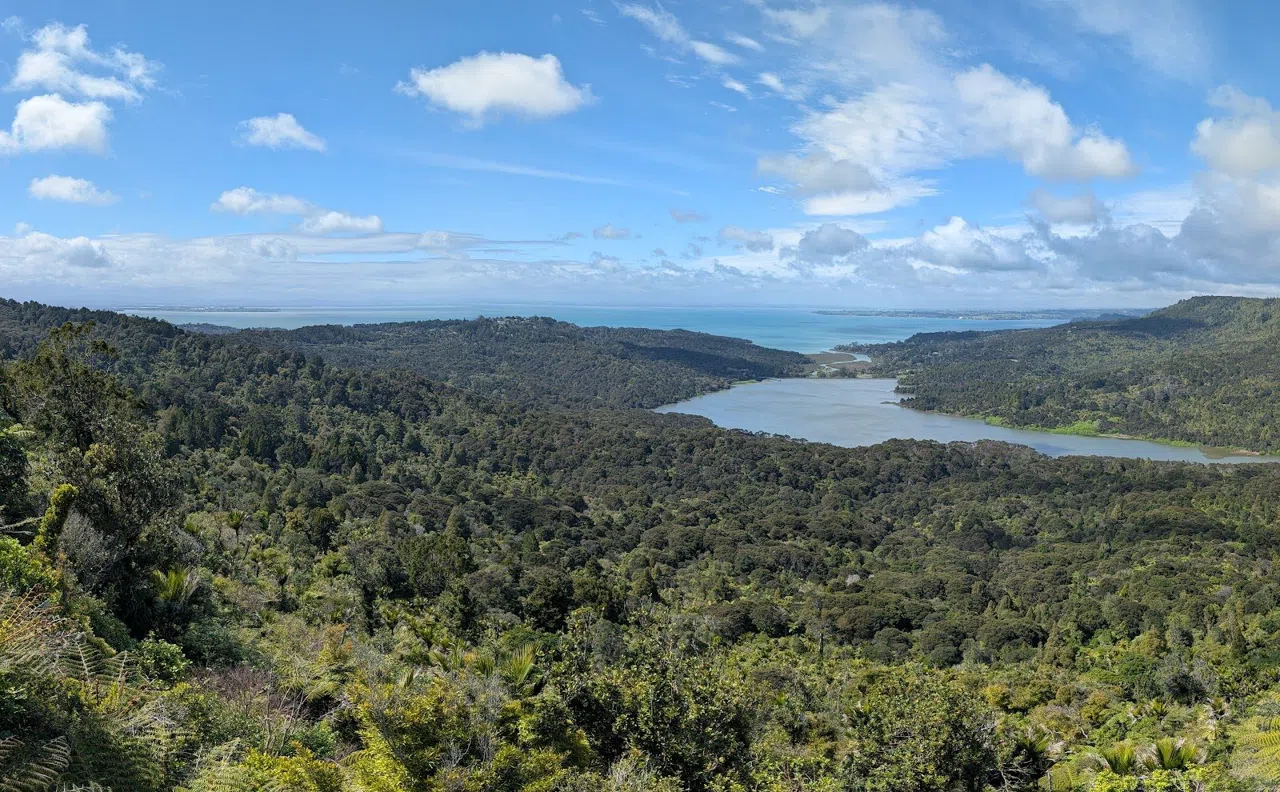

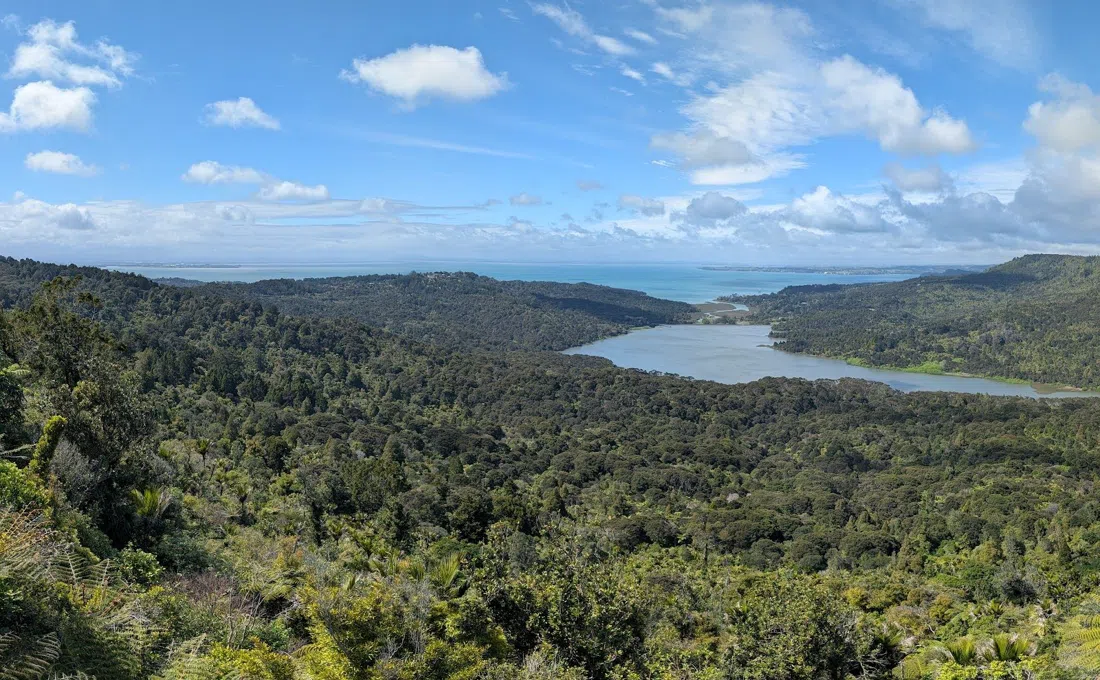
Twenty minutes past the last motorway off-ramp, Auckland's western suburbs give way without warning to five hundred square kilometres of regenerating rainforest, black volcanic sand and cliffs still visibly recovering from the storms of the past few years. The Waitākere Ranges Regional Park sits closer to a major international city than almost any comparable wilderness on earth, and it rewards a single well-planned day more generously than most destinations reward a week. This guide sets out where to go, what's actually open in 2026 after a run of storm and fire damage, and who each stop genuinely suits.
Where to Start: Arataki Visitor Centre
Most day trips into the ranges should begin at Arataki Visitor Centre, Titirangi/Scenic Drive, a free public building perched above the forest canopy with a car park, picnic areas and a scatter of short loop tracks radiating from the doors. It reopened fully after Scenic Drive's long storm-repair closure and is now back to running regular public events, which makes it worth timing a visit around rather than treating as a pure pass-through. The centre takes coach and school groups without friction, and some of its spaces can be booked for private group events, so it works equally well for a family stopping for twenty minutes and for a tour operator staging a briefing before the group scatters into the forest. The real value here is orientation: staff and displays explain which tracks are currently open, which are affected by kauri dieback controls, and what the day's weather is likely to do to the coast roads — information worth having before committing to Karekare or Whatipu.
Kauri Forest You Can Actually Walk To
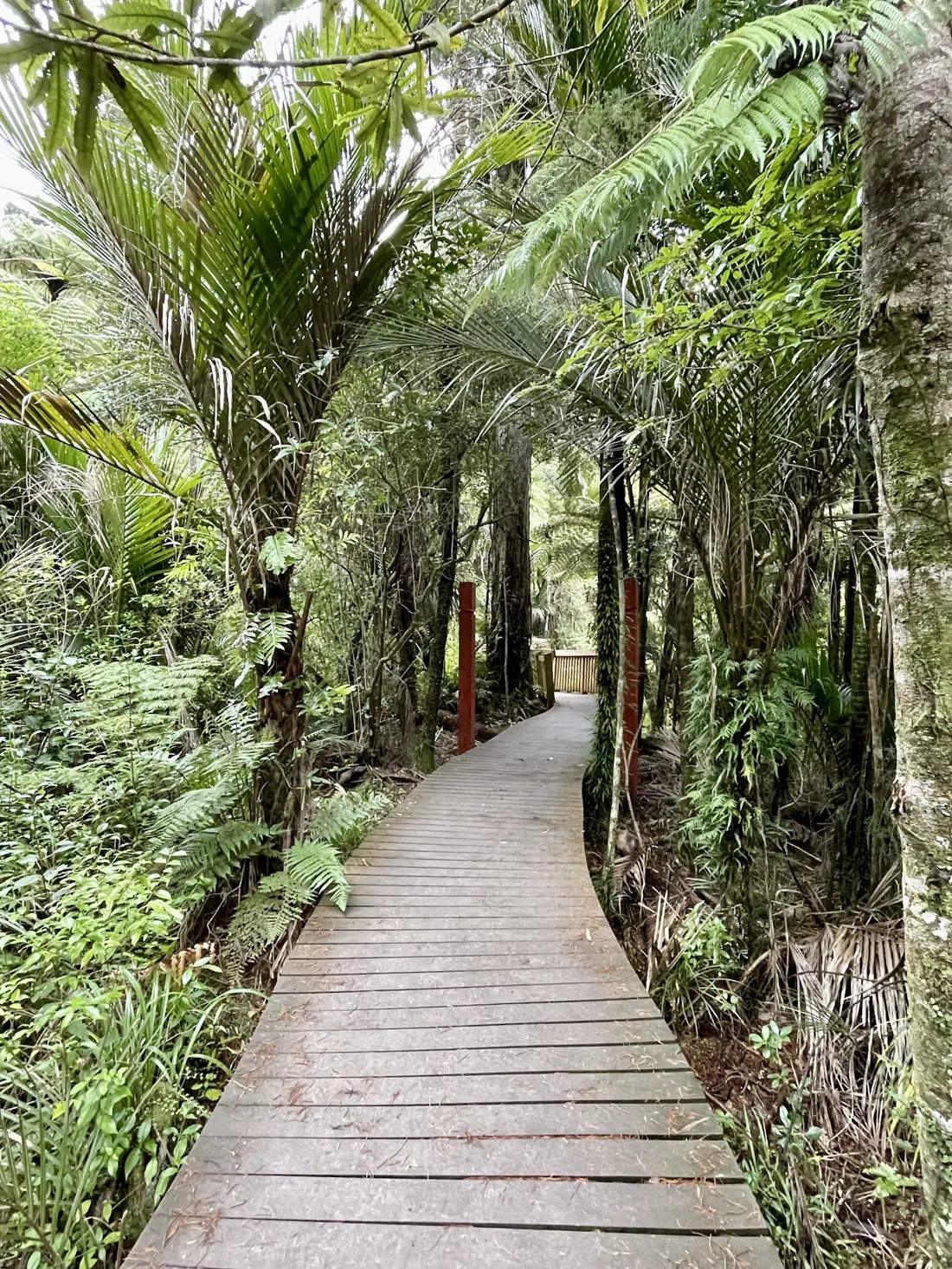
The ranges hold some of the last significant stands of kauri near Auckland, and the most reliable way to see them in 2026 is Te Piringa / Cascade Kauri Park, off Scenic Drive near Waitakere township. The park's tracks are gentle, mostly flat and largely boardwalked, which makes it the one kauri-forest stop in this guide that suits a genuine range of fitness levels and a group that doesn't want to commit to a full bush walk. Boot-cleaning stations sit at the entrance and should be used without exception — kauri dieback is a soil-borne disease with no cure, and every visitor's boots are a vector. Three connector tracks here — Zion Hill, Kuataika and Smyth Ridge — had been closed for kauri-dieback protection upgrades and reopened through 2026, and the storm-damaged bridge on the main Te Piringa loop has also been repaired, so this is now the most complete and dependable kauri walk in the park rather than a partial one. It suits families, older visitors and groups who want genuine ancient forest without a demanding hike, and there's no booking required.
The Waterfall Walks
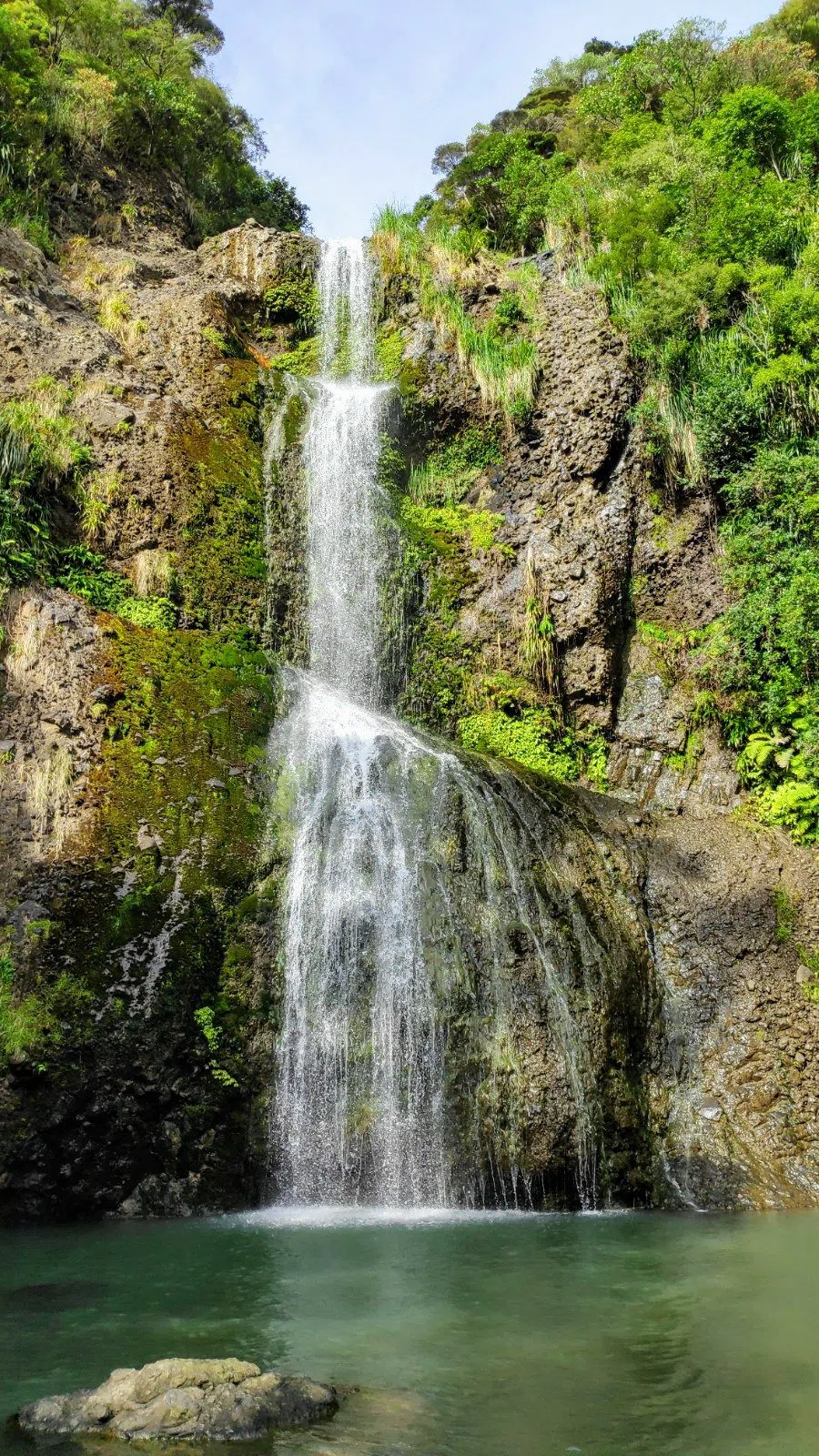
Two waterfall tracks anchor most itineraries, and they now sit in noticeably different conditions. Kitekite Falls Track, near Piha, is an easy three-kilometre return walk on a well-formed path, manageable for most fitness levels and small groups, with no booking needed and no charge. Access to the falls was restored after earlier storm damage, though the local council retains the right to impose short closures after heavy rain, so it's worth checking conditions on the morning of the trip rather than assuming the previous day's status still holds — a five-minute check against real-time notices, not a guess based on how the walk looked last time.
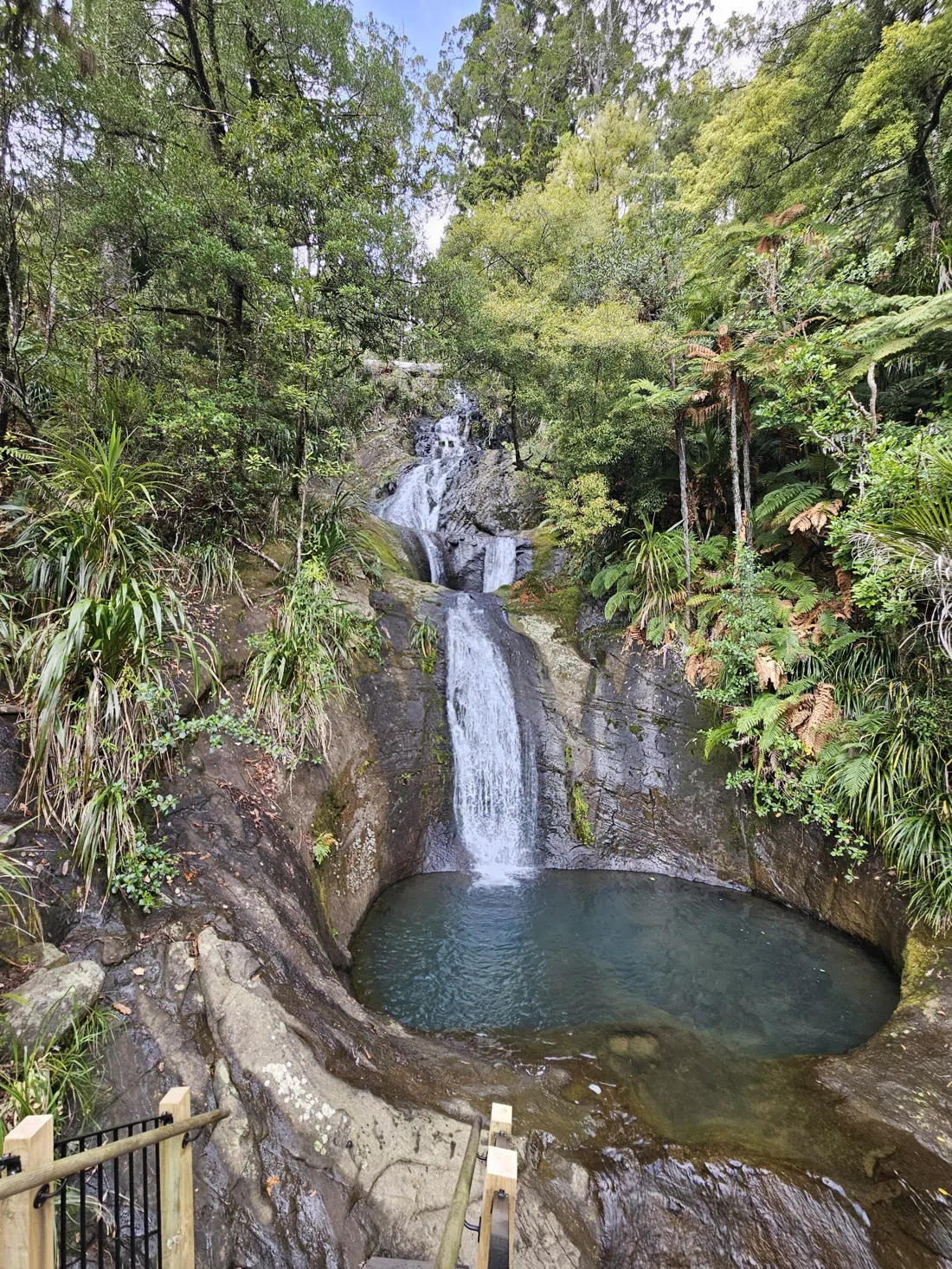
Fairy Falls Track, also reached from the Scenic Drive side of the ranges, is roughly an hour's return walk to a viewing platform and suits small groups at a moderate fitness level. It is only partially open in 2026: a fire in November 2025 damaged the stairs, the swimming platform and the bridge, and while the viewing platform itself remains accessible, the lower pools and the swim spot are closed. The honest way to sell this one to visitors is as a lookout walk rather than the swimming stop it used to be — anyone arriving with togs and a plan to cool off in the pools below will be disappointed, so it's worth setting that expectation before they set out.
The Black-Sand West Coast
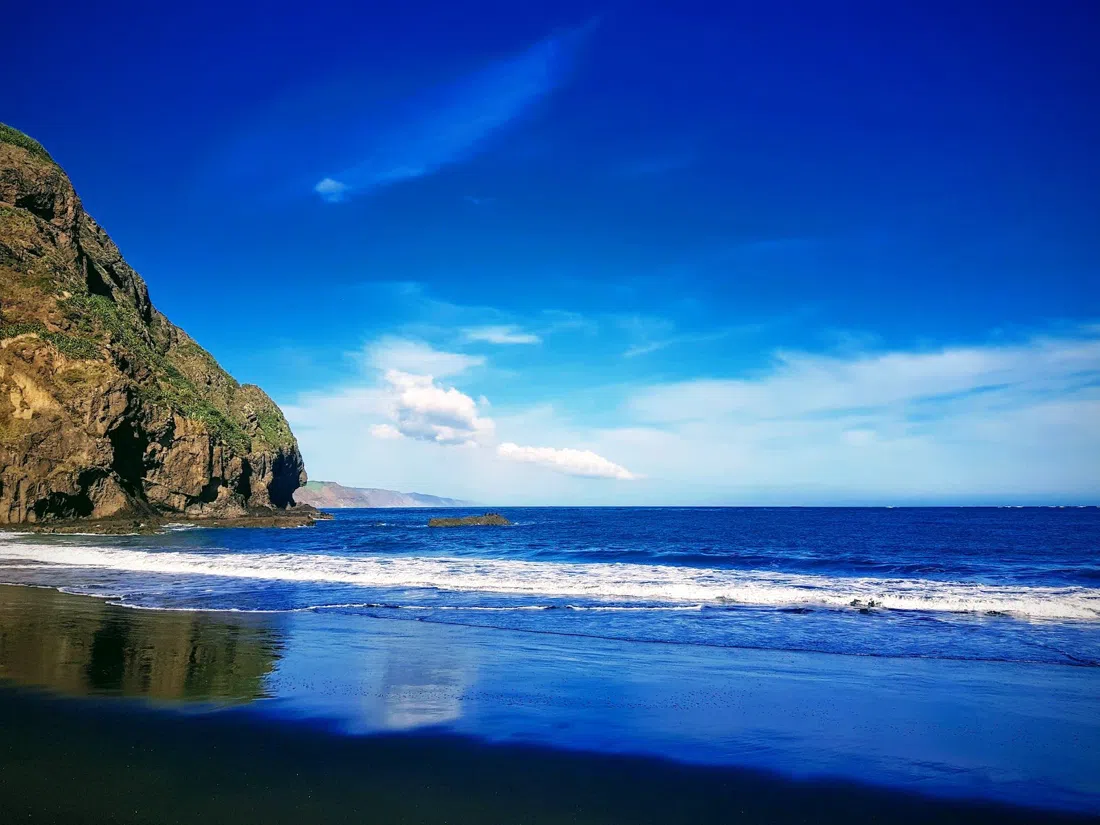
The Waitākere coast is defined by black iron-sand beaches backed by cliffs, and each of the three main options here has a distinct character and a distinct level of remoteness.
Karekare Beach, the closest of the three to central Auckland and familiar to anyone who has seen The Piano, is an open beach with its own car park and works well for small-to-medium groups. There is no lifeguard patrol outside the summer flagged season, which matters on a coast with a real rip current risk — this is a beach for walking, photographing and picnicking rather than casual swimming outside patrol hours. The access road suffered heavy storm damage in 2023 and repairs have run for years since; the road itself is open and passable in 2026, but given the ongoing works nearby on Lone Kauri Road, a same-day check before setting out is sensible rather than paranoid.
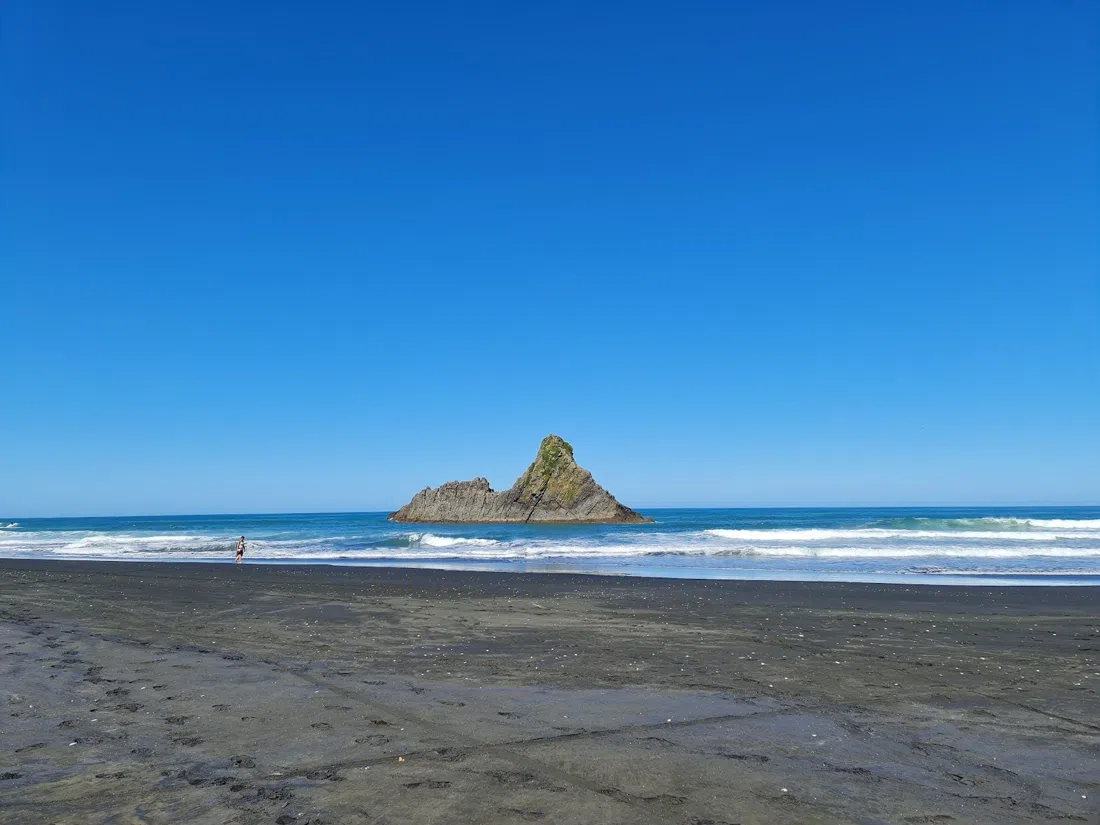
Bethells Beach (Te Henga), further north, is another open beach with car parking that handles groups comfortably, but it comes with one important change to how it should be pitched: the full Te Henga Walkway traverse — the coastal through-hike that used to link Bethells to the ranges beyond — is no longer possible. The middle section was permanently closed after cliff collapses. Present it instead as a beach and dune destination, which is what it now is, and pair it with the walk-in described below rather than promising a hike it can no longer deliver.
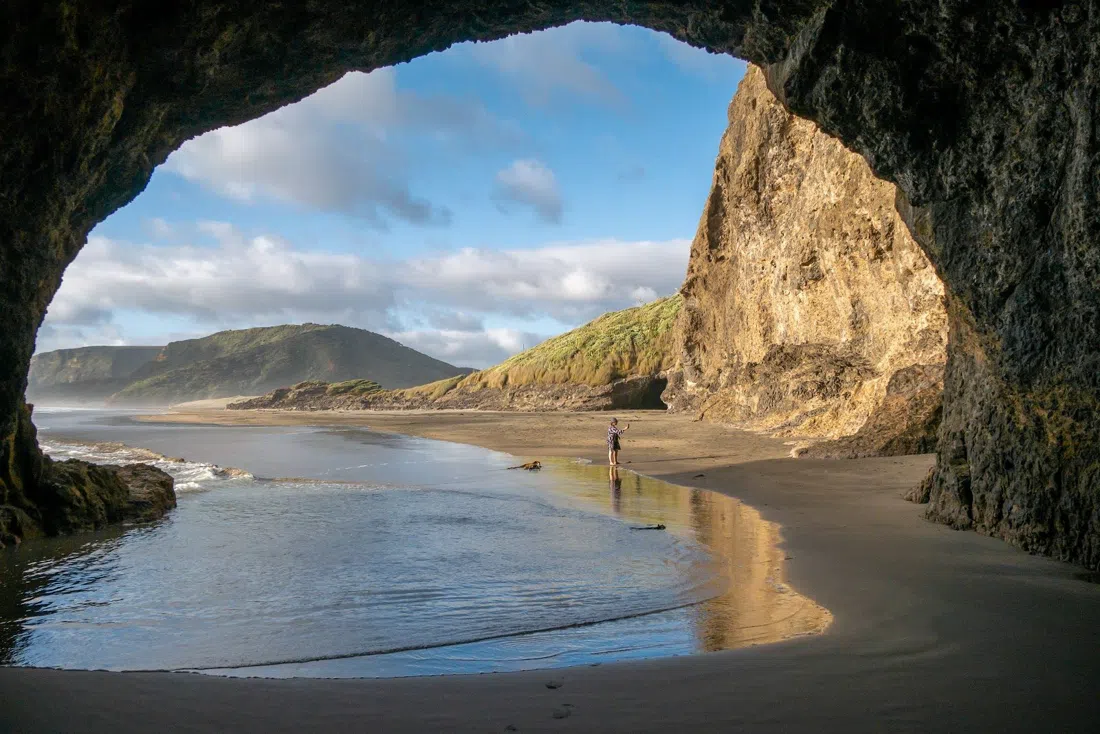
Whatipu Beach & Caves, at the southern end of the park, is the most remote and least crowded of the three. It effectively requires a car — the final six kilometres of access road is unsealed gravel, and the drive in is slow and winding enough to budget real extra time for. The caves and coastal tracks themselves are open, and the reward for the longer drive is a beach that rarely feels busy even on a fine weekend, which makes it the pick for couples or small groups actively seeking distance from other visitors rather than convenience.
A Dune Lake Worth the Detour
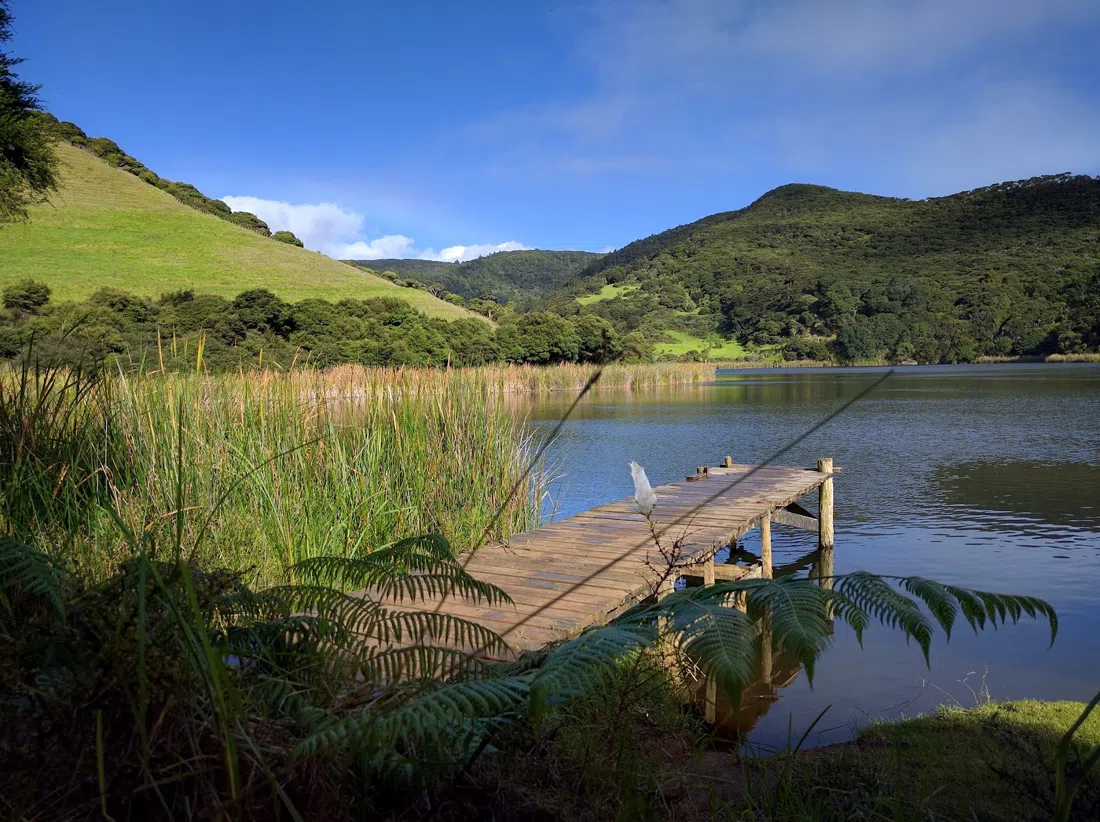
From the same Bethells car park, a roughly forty-minute easy walk leads in to Lake Wainamu, a freshwater dune lake that suits small groups and anyone keen to swim rather than just look. Visitors can walk in and swim without difficulty, but the full loop track around the lake remains closed by slips as of 2026, so this is a there-and-back walk rather than a circuit. It pairs naturally with Bethells Beach as a single half-day leg — beach first, lake on the way back to the car, or the reverse depending on the tide and the light.
North to Muriwai: Gannets and a Different Kind of Beach Day
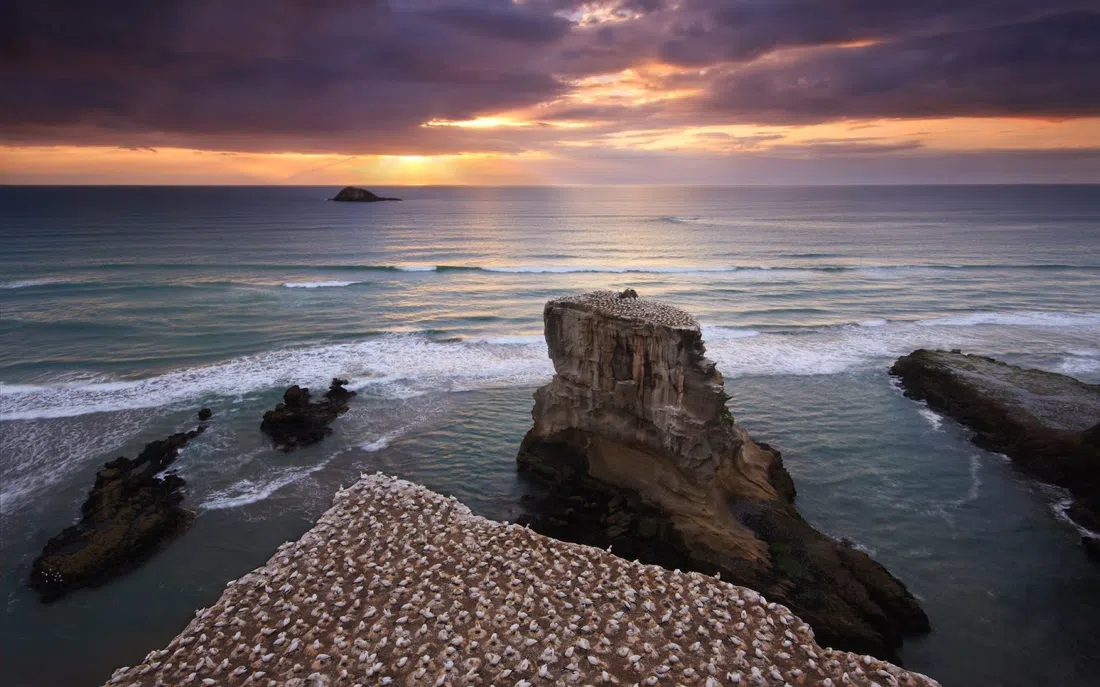
Muriwai Gannet Colony, at Ōtākamiro Point, is one of the more genuinely distinctive stops on this list — a working seabird colony reachable via a short, flat access track from the car park to viewing platforms just metres from thousands of nesting gannets. It suits any group size, is free and needs no booking. The gannets are in residence from August through March, which puts this article's publication squarely inside the season. There was a scheduled maintenance closure through the evening of 7 August 2026, reopening the same night, so anyone visiting from that date onward will find it clear.
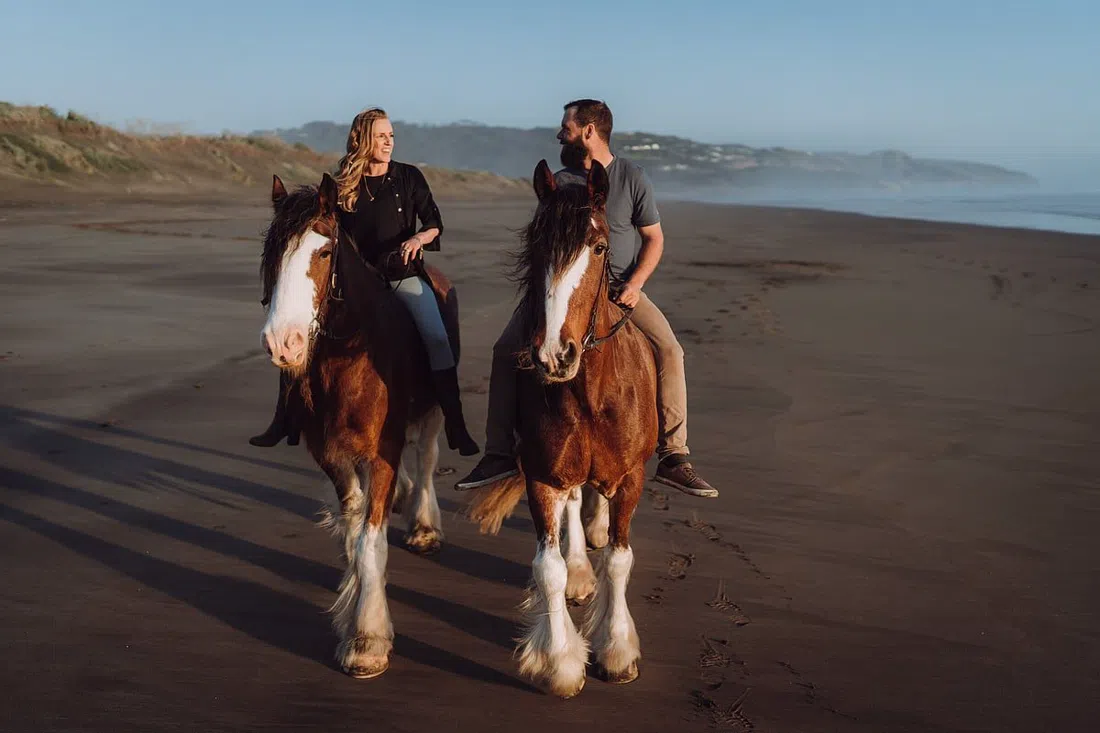
For a genuinely different way to experience the same stretch of coast, Muriwai Beach Horse Treks runs small-group rides for beginners through to experienced riders, Tuesday to Sunday, bookable online, at a mid-range NZ dollar price per rider that varies with trek length from one hour up to a full day. This is worth flagging specifically to an international readership: black-sand beach riding is a genuine point of difference against generic forest trail rides available almost anywhere, and it books out in summer, so advance booking rather than a same-day walk-up is the realistic plan.
Without a Car: A Guided Day into the Ranges
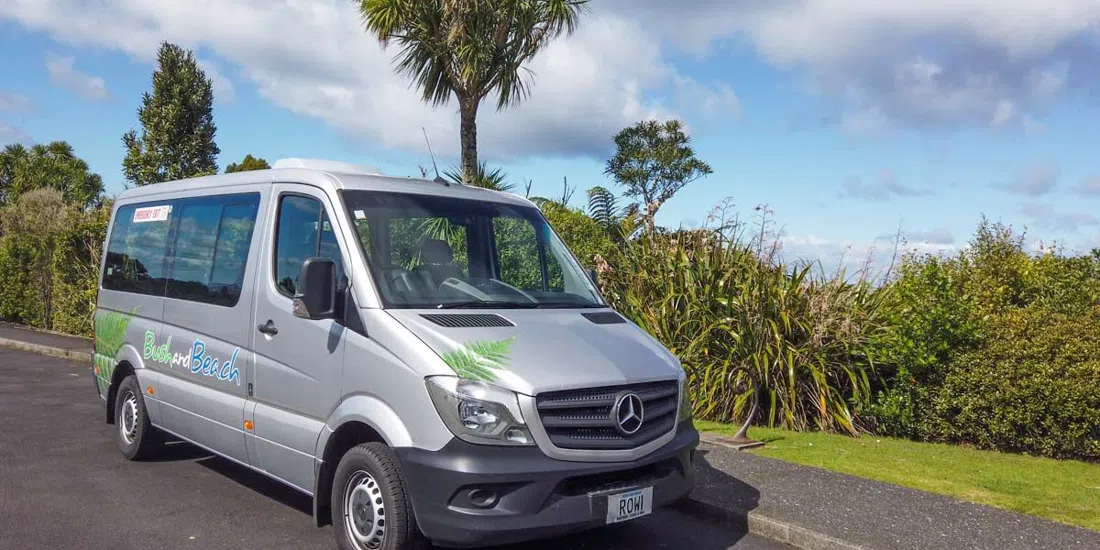
Not every visitor arrives in Auckland with a rental car, and the Waitākere Ranges are poorly served by public transport once you're off the main roads. Bush and Beach, a locally run operator now in its forty-second year, solves this directly with small-group guided day tours — no self-drive required — typically combining Arataki, Piha and rainforest walking in a single half-day or full-day trip, priced per person in New Zealand dollars. For visitors staying centrally and working from an Auckland guide rather than a rental agreement, this is the natural way to see the ranges without logistics eating the day, and its longevity as an operator is itself a reasonable proxy for reliability in a region where road access can change with the weather.
A Rain-Day Alternative in the Gateway Village
Titirangi, the village that sits at the gateway to the ranges, holds Te Uru Waitākere Contemporary Gallery, a free public gallery in the Lopdell Precinct open daily from 10am to 4.30pm with a rotating exhibition programme. It takes groups easily and works well either as a genuine wet-weather fallback when the coast roads are unsafe, or simply as a way to bookend the day — a coffee and a look at contemporary New Zealand art before the forest and beach legs of the trip, or after them on the way back into the city.

Practical Notes
The Waitākere Ranges begin roughly twenty to thirty minutes' drive from central Auckland, but a proper day covering the coast and the forest interior easily runs to two hours or more of total driving once Scenic Drive's bends and the gravel run into Whatipu are factored in — this is not a park to rush between two stops. A car is the most flexible way to see it; for visitors without one, Bush and Beach's guided tours are the realistic alternative, since public transport does not reach the beaches or the deeper forest tracks. Most stops in this guide — Arataki, the kauri park, both waterfall tracks, all three main beaches, Lake Wainamu and the gannet colony — are free, so a day here can be genuinely low-cost outside of the horse treks or a guided tour; carrying some cash is still sensible for the odd honesty-box car park or a coffee in Titirangi where card readers aren't universal. Mobile coverage drops out in patches through the ranges, so it's worth downloading directions and checking track and road status — particularly for Karekare's access road and Kitekite after rain — before leaving rather than relying on a signal that may not be there. Visitors basing themselves in the city for this trip can sort accommodation through this Auckland hotel search before working out which side of the ranges — Titirangi and the kauri forest, or Muriwai and the coast — suits their itinerary best. Given how much of the day depends on weather and road conditions, an early start is worth more here than in most day-trip destinations: mornings tend to be calmer on the coast, car parks at Piha and Karekare fill by midday on fine weekends, and the light through the kauri canopy is better before noon in any case.