The Auckland issue
Auckland's Black-Sand Coast: Piha, Muriwai, and the Wild Tasman Edge
Sixteen stops along Auckland's untamed west coast, from Lion Rock's surf patrol to a gravel-road beach nobody photographs.

By Tomás FerreiraAuckland by cone, coast and neighbourhood
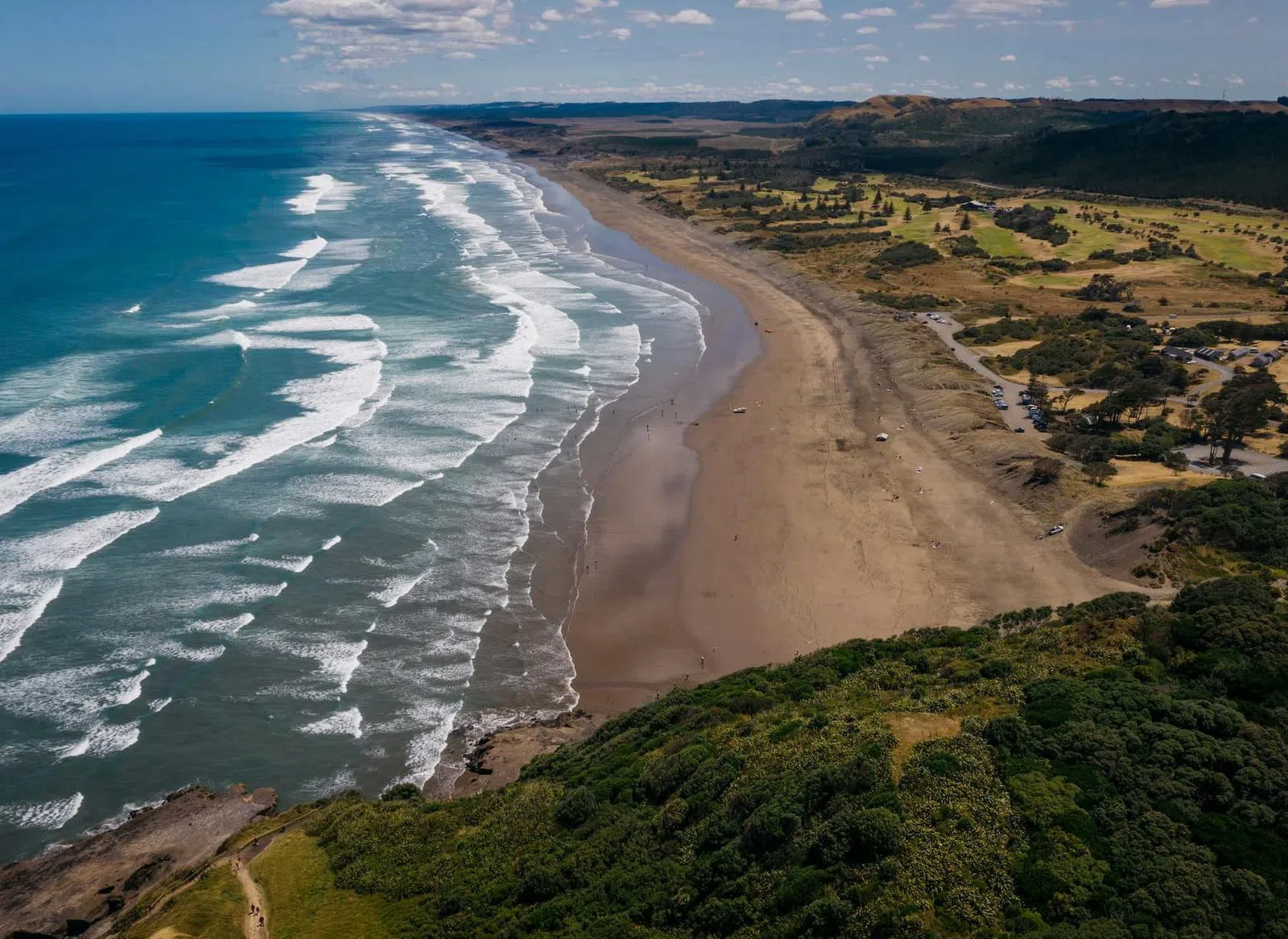
West of Auckland the land runs out of patience with the Tasman Sea. Cliffs of black ironsand drop straight into surf that answers to nothing, and the road out from the city climbs through rainforest reserve as though reluctant to let visitors arrive too easily. This is Auckland's west coast — a string of black-sand beaches that sit less than an hour from the city centre and yet feel like they belong to a different, wilder country. The sand itself is heavy with titanomagnetite, the iron ore that gives it its colour and its heat; walk it barefoot at midday in January and you will regret it. That mineral weight is also why the surf here breaks the way it does, and why generations of Aucklanders have treated this coast as a serious, sometimes dangerous, escape rather than a soft day at the beach. It rewards a full day rather than a rushed detour: the beaches sit close enough together to string two or three into one loop, but far enough apart in character that no two visits feel the same.
Piha: Lion Rock and the Village
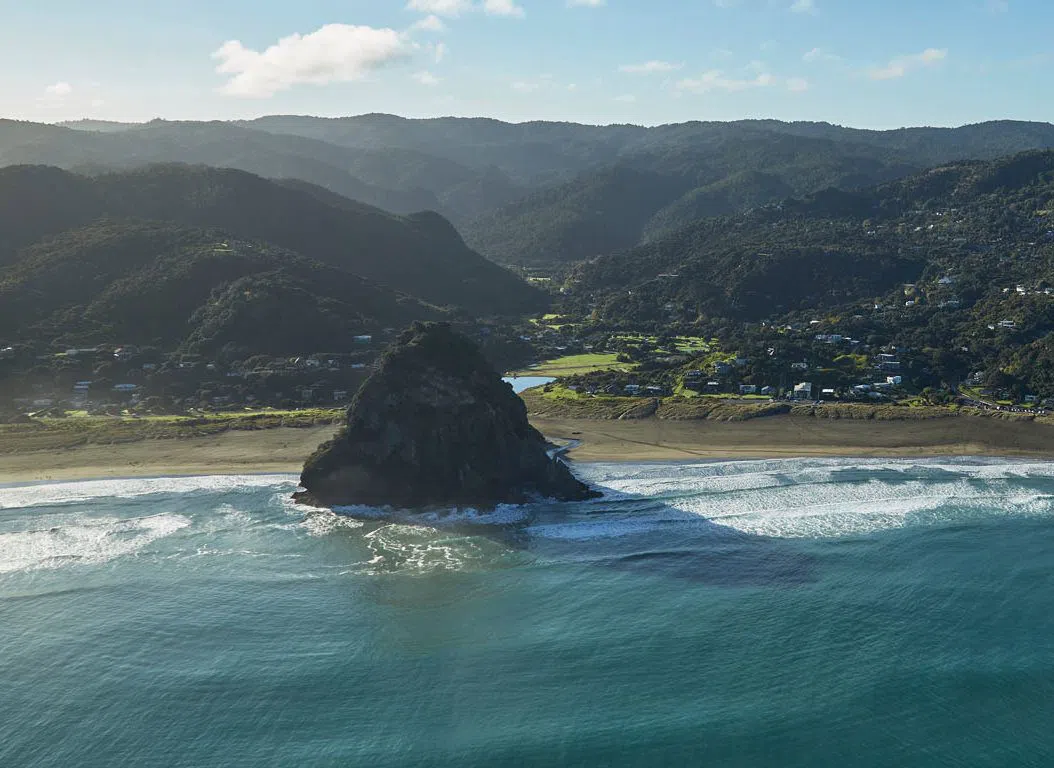
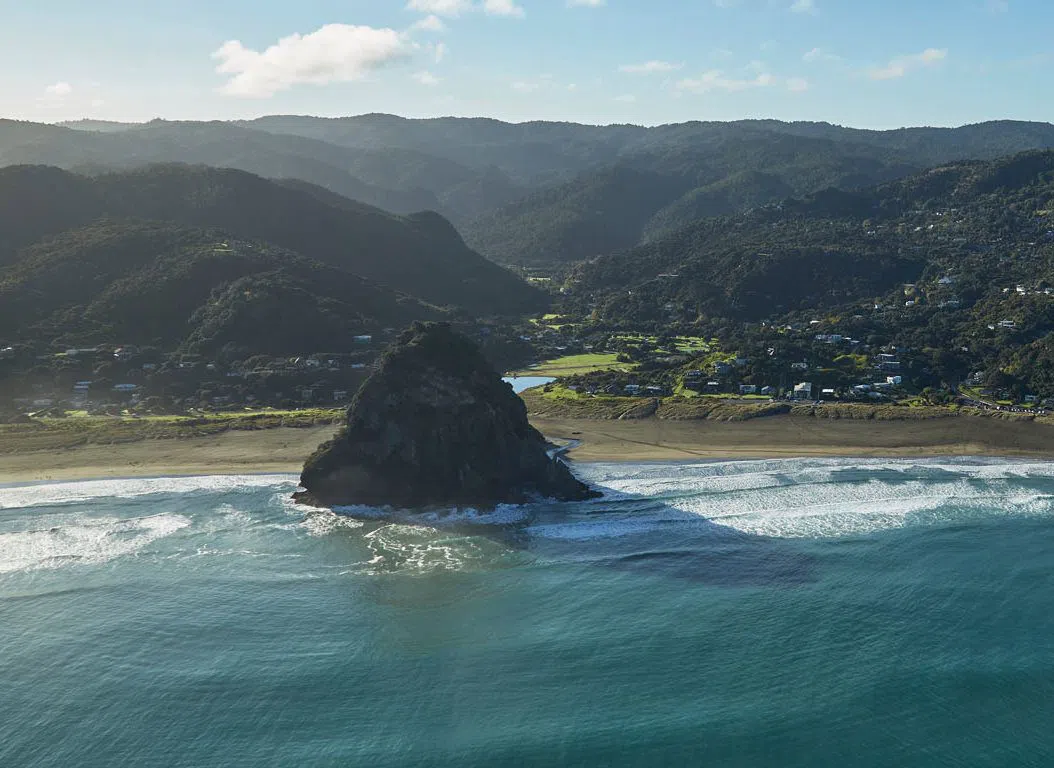
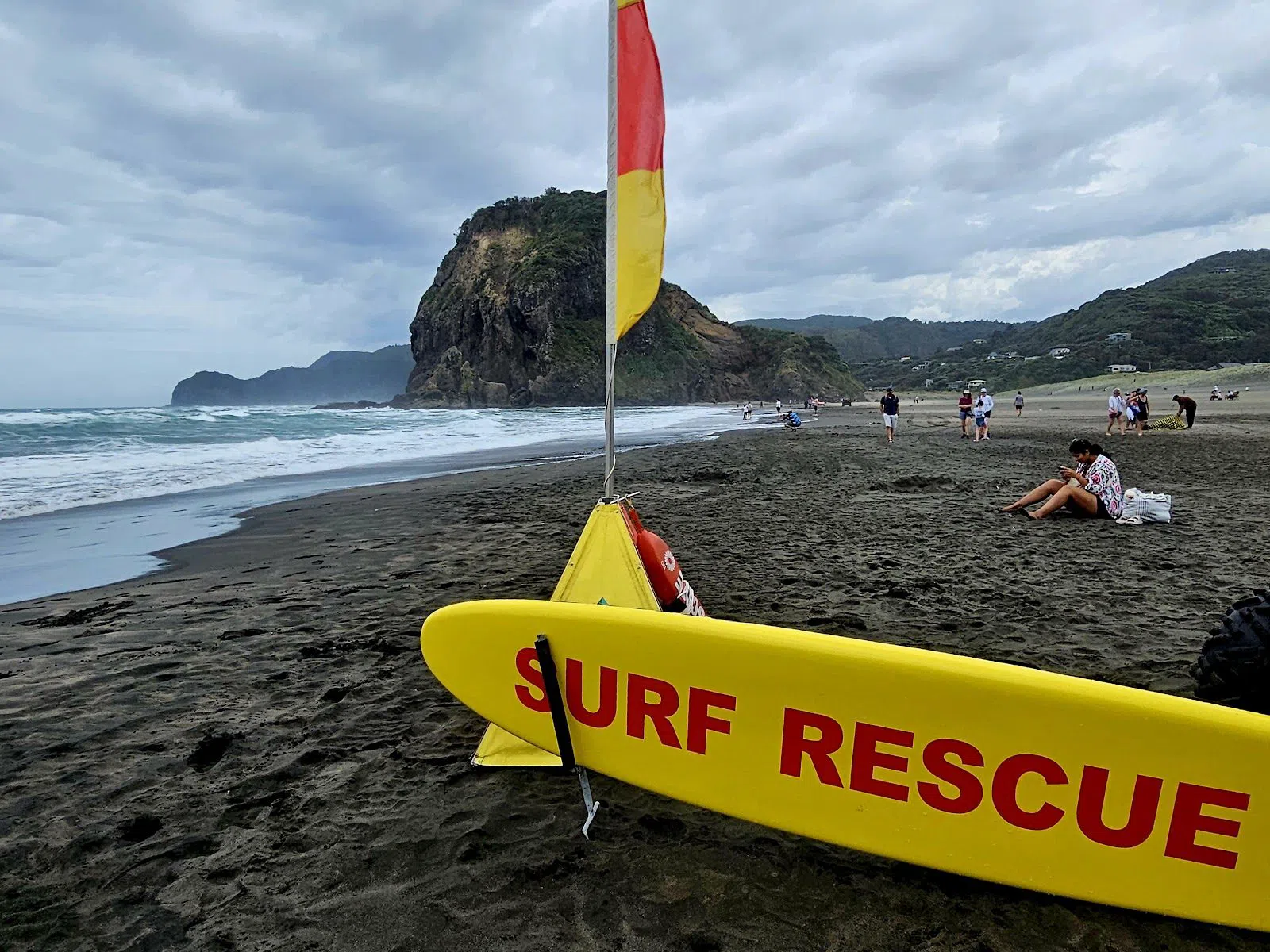
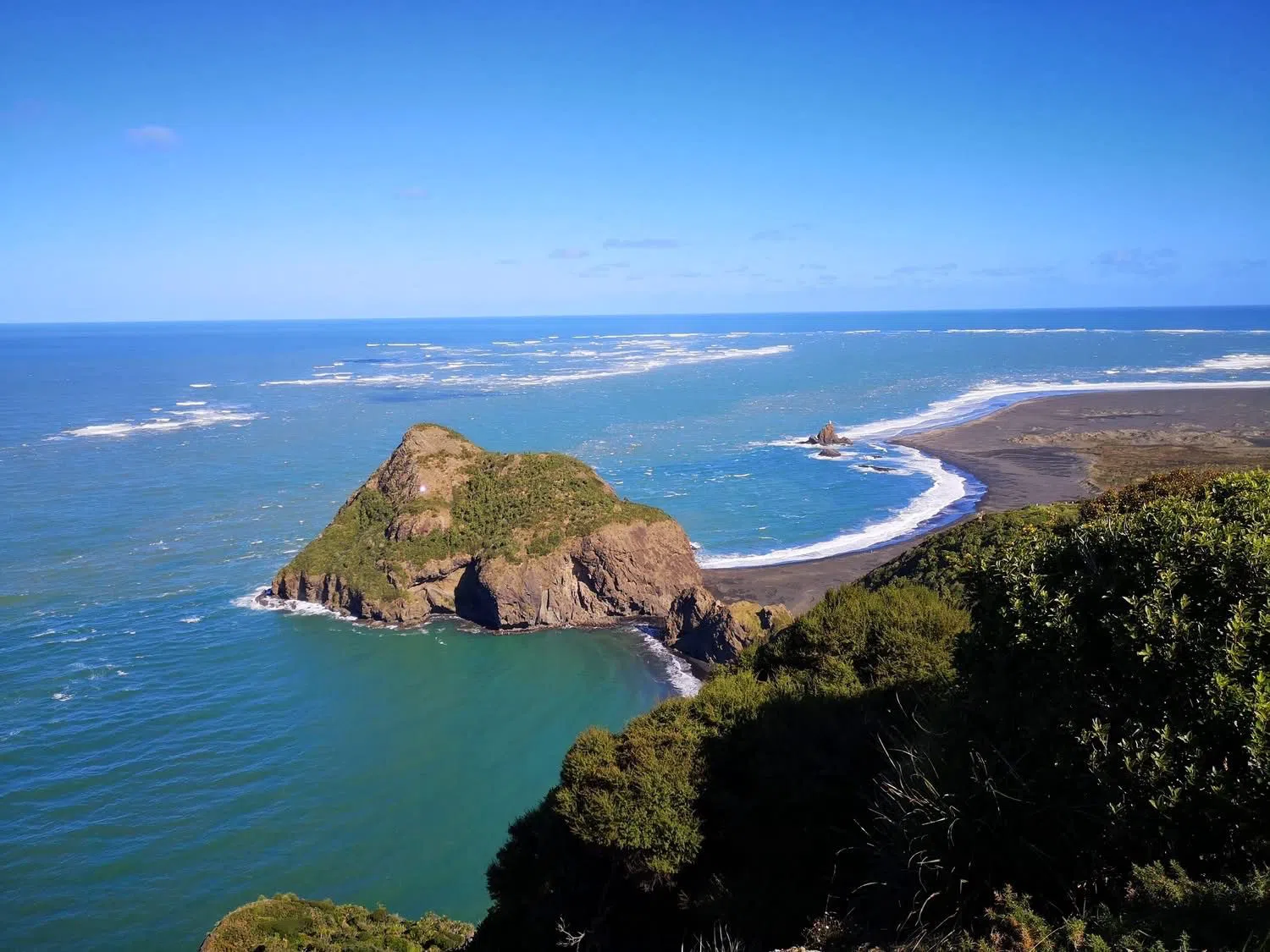
Piha Beach, in the small settlement of Piha, is the beach that put this whole coast on the map, largely thanks to the long-running television series Piha Rescue and its red-and-yellow patrol towers stationed beneath Lion Rock, the basalt outcrop that splits the bay in two. It is open, free, and needs no booking, and it copes well with coach and tour groups provided they stay within the flagged, patrolled area — the rip currents either side of Lion Rock are genuinely dangerous, and the lifeguards' flags are not decorative. Piha is lifeguard-patrolled through summer 2026, and that patrol is the difference between a good afternoon and a bad one; this is not a beach to underestimate because it looks accessible.
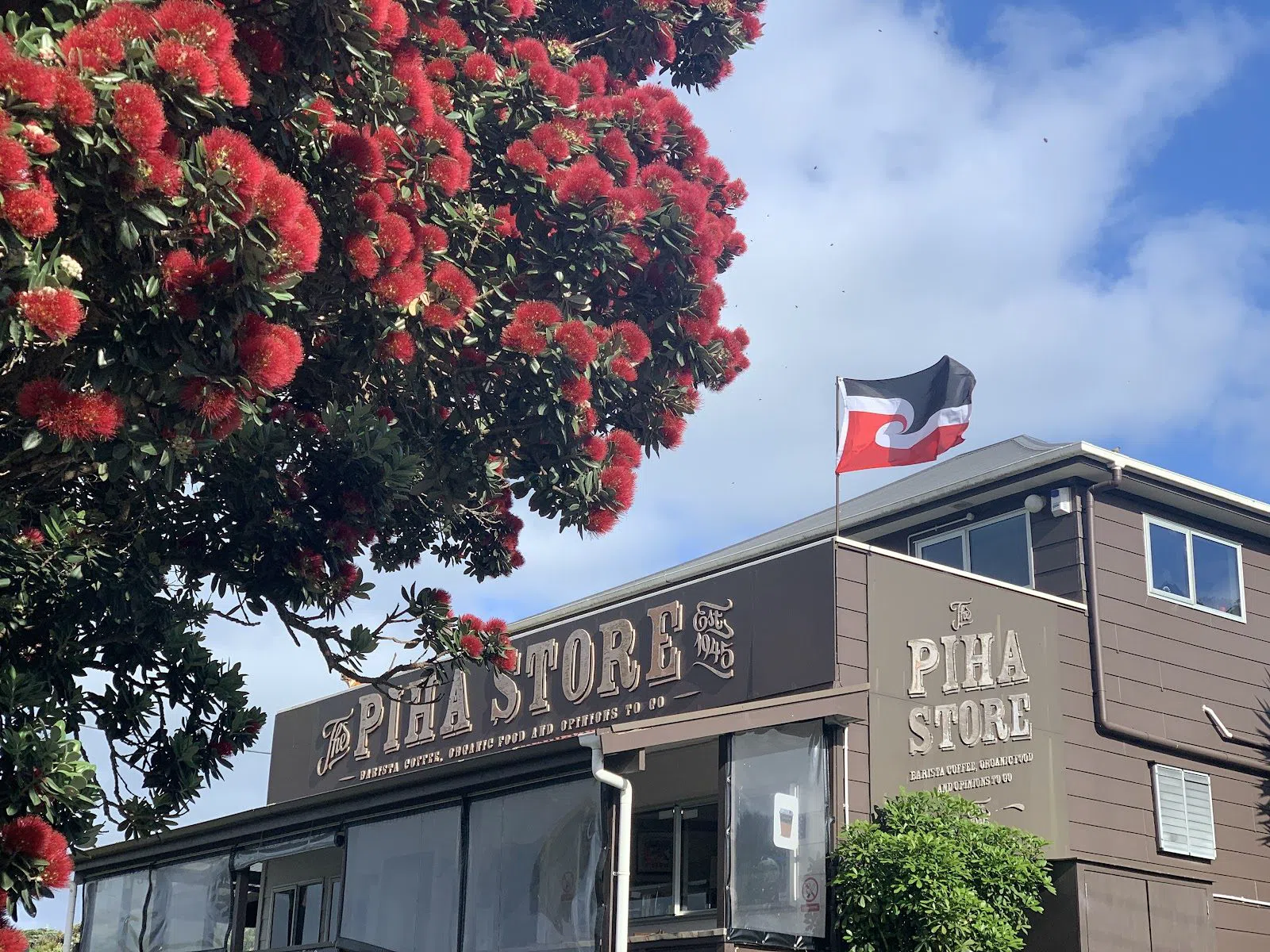
The village behind the beach is small enough to walk in ten minutes, and its social centre is the Piha Store, running since 1945 and still the place for a pie and a coffee after a surf. It seats small groups comfortably but has limited indoor space, so it suits an informal stop rather than a sit-down group lunch — expect to pay roughly NZ$5 to NZ$20 for a light meal or coffee. A short walk along the beach, the Piha Surf Life Saving Club is New Zealand's busiest and most-filmed surf club, the one behind the Piha Rescue franchise, and its clubhouse deck is arguably the best sunset seat in the village. Watching the patrol is free; the clubhouse bar and restaurant charge separately, and the club also offers venue hire and hostel-style accommodation for groups, though it is worth contacting them ahead rather than turning up expecting space.
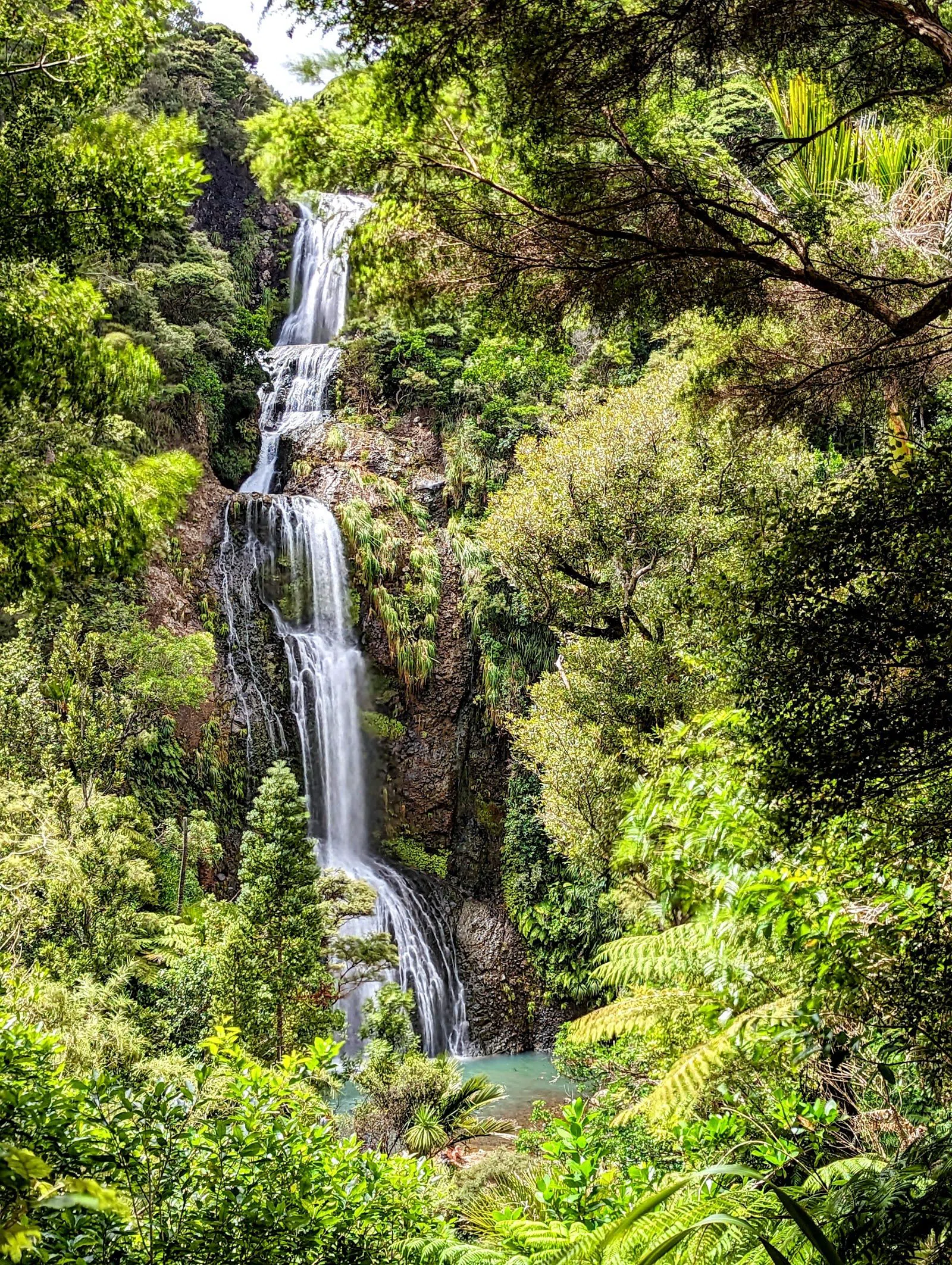
Inland from the village, the Kitekite Falls walk starts from Glenesk Road and is, by some margin, Auckland's most-swum waterfall — a moderate, easy walk that groups manage without difficulty. The main out-and-back track is open and verified for 2026; the Knutzen Track loop extension has stayed closed since a bridge washout, so treat this as a there-and-back trip rather than a loop, and don't plan on emerging from a different trailhead.
Plan your Auckland trip
Live prices from our booking partners.
Free cancellation on many rooms. We may earn a commission when you book.
Muriwai: Surf, Gannets, and Horses on One Bay
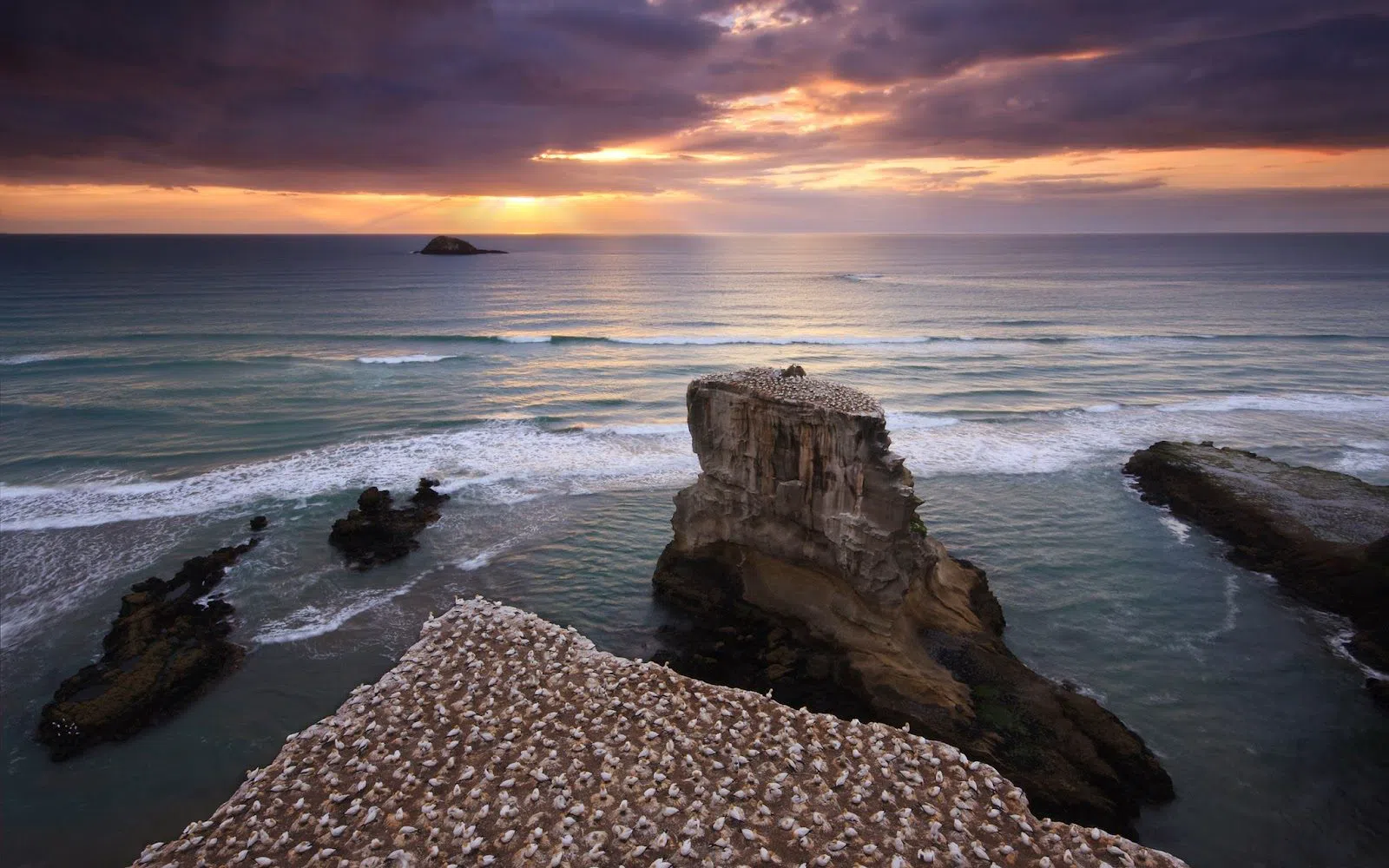
If Piha is the coast's best-known face, Muriwai Beach is its most complete. It combines serious surf, a resident gannet colony, and horse treks into black volcanic sand within a single bay, and it does all three without the access headaches that limit some of its neighbours — a large car park means it copes easily with big groups, and there is no fee to visit. The Muriwai Gannet Colony, at Ōtakamiro Point, is the one stop on this coast where wildlife rather than scenery is the actual headline: free, 24-hour public viewing platforms put you close enough to the colony to hear it before you see it. The colony reopened in December 2024 after the Maukatia Gannet Track was closed by storm damage, and as of 2026 it is fully open again, handling groups easily with no booking required — arrive between roughly October and March to see the birds in residence, since gannets largely disperse out to sea for the rest of the year.
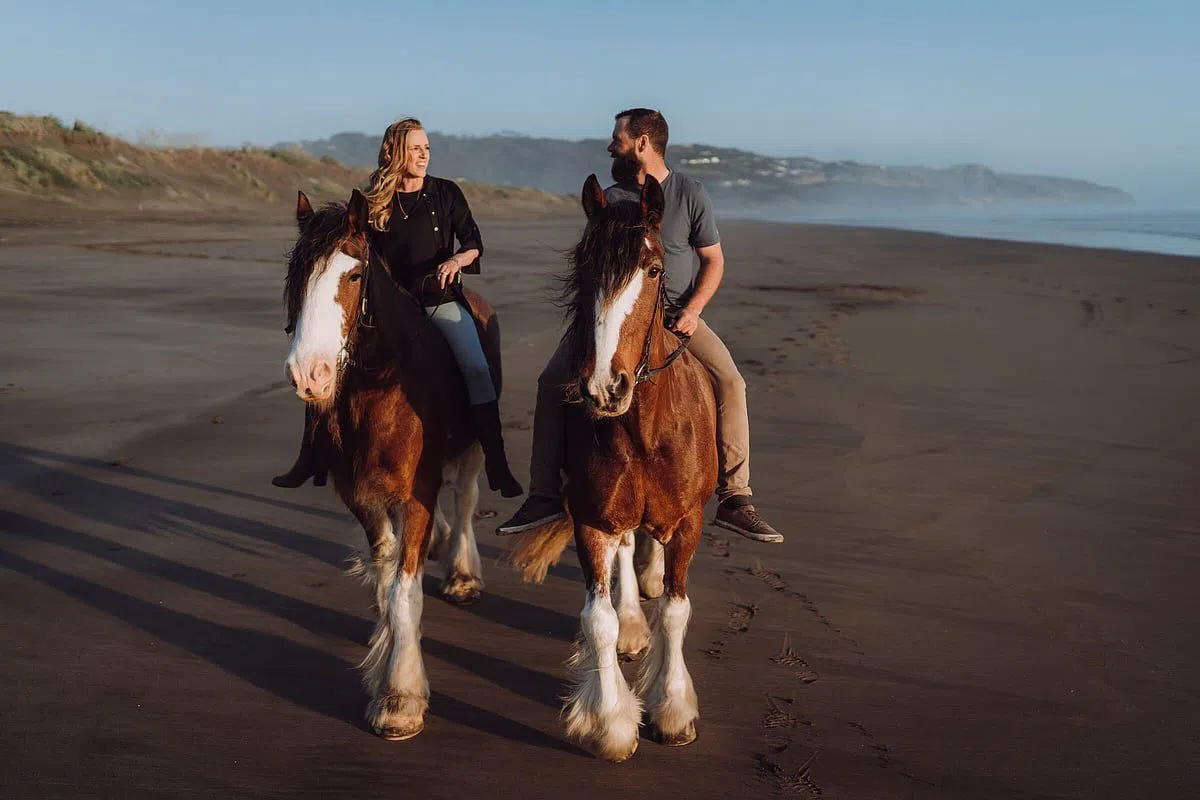
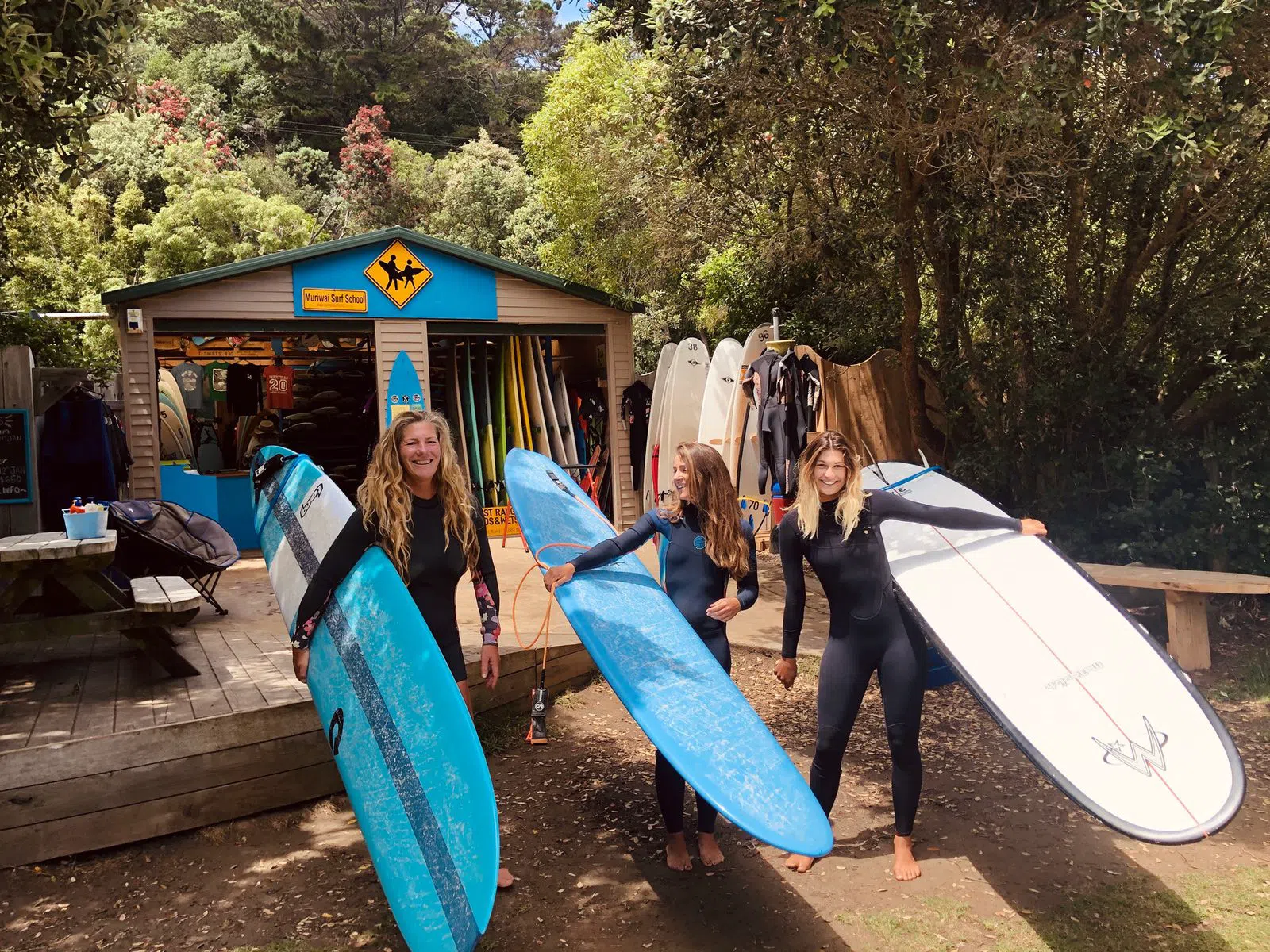
For anyone wanting to actually get into the water rather than just look at it, the Muriwai Surf School runs purpose-built group lessons twice daily, at 10:30am and 3pm, for a minimum age of 11, at NZ$70 for a two-hour group lesson including board and wetsuit. It is Kiwi-owned and lifeguard-run, and given how unforgiving this coast's surf can be for the inexperienced, it is the sensible way in rather than a paddle-out-and-hope approach. A short distance inland, Muriwai Beach Horse Treks offers rides for all skill levels from age five, with group treks bookable alongside private multi-hour options; prices start around NZ$60 for a walk-only session and rise to roughly NZ$250 for a three-hour private ride into Woodhill Forest. Riding black volcanic sand with the forest behind you is not something replicated elsewhere on this coast, and the operation runs Tuesday to Saturday through 2026.
Karekare: The Quiet One
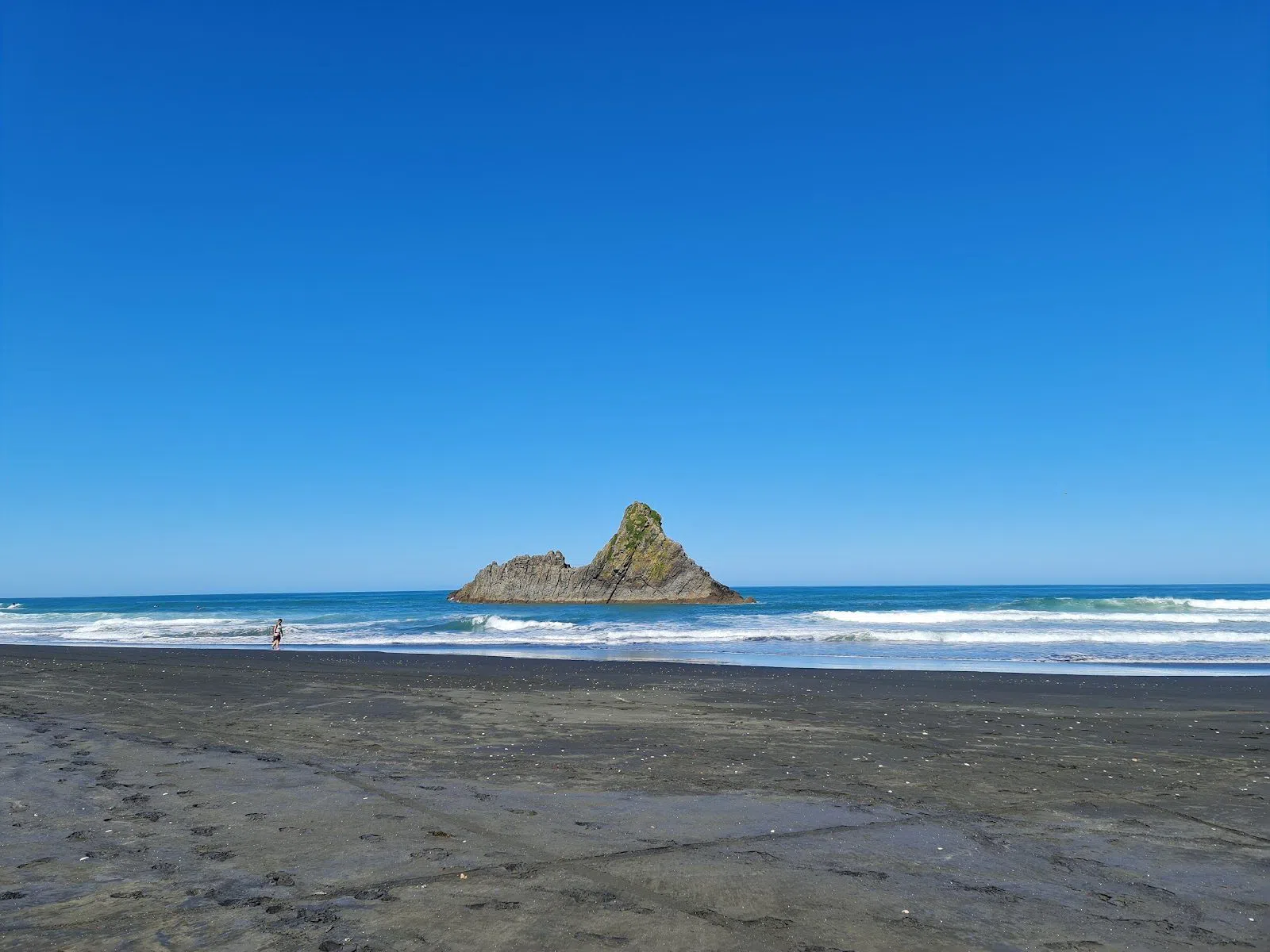
Karekare Beach, a few minutes' drive south of Piha, is the least commercial of the coast's three best-known beaches, and it carries genuine film history — it is the black-sand shore where Jane Campion shot The Piano. It is open and free to visit, and access via the Zion Hill and Comans tracks has reopened and is verified for 2026, but the car park is small, which rules out large coach groups even though independent groups of moderate size manage fine. There is no village here, no store, nothing but bush, dunes, and a long stretch of sand backed by cliffs — which is exactly its appeal to travellers who found Piha a little too busy.
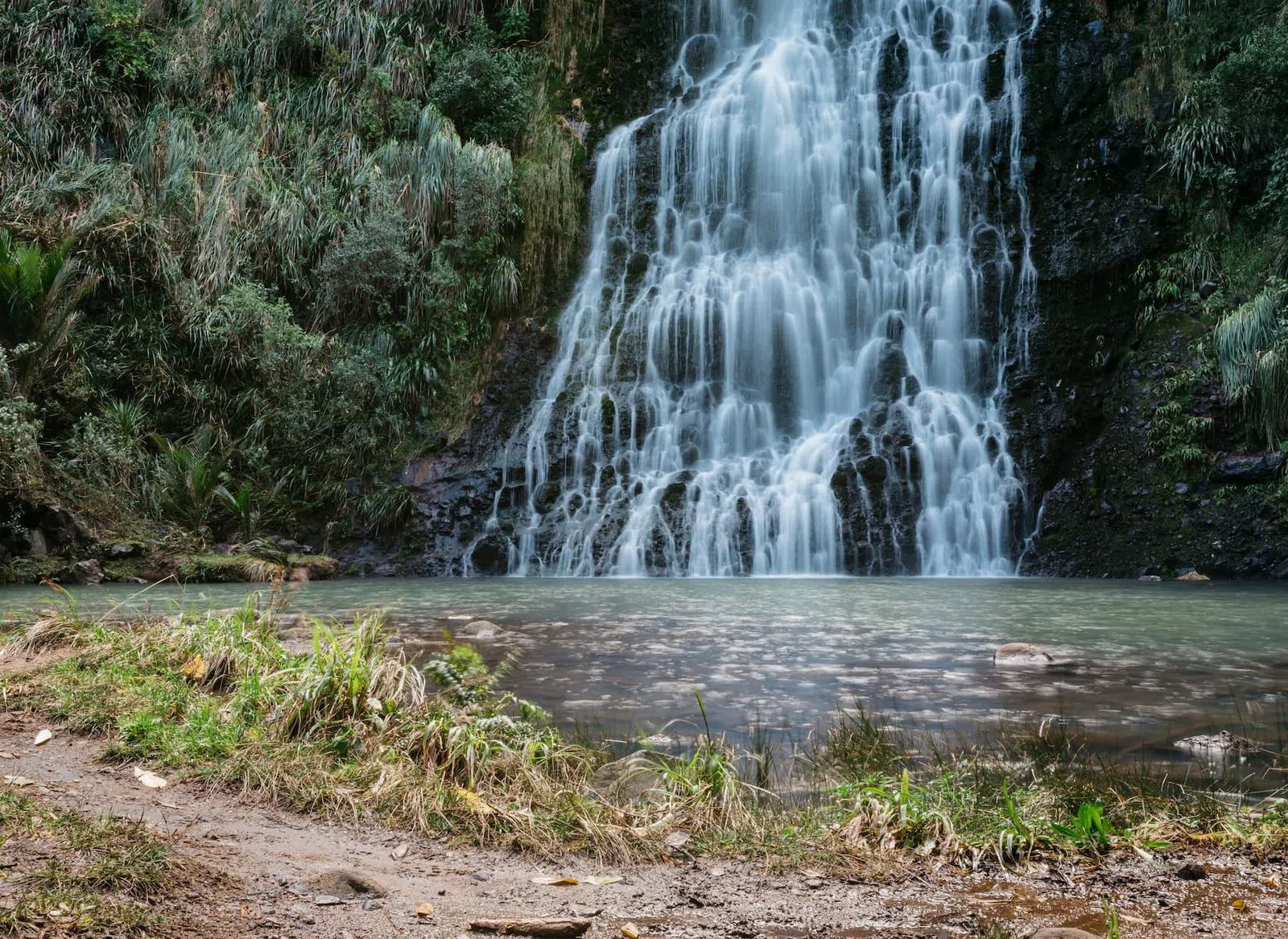
A five-minute walk from the same car park, on sealed road the whole way, Karekare Falls delivers one of Auckland's more photogenic waterfalls with minimal effort — easy for groups, no booking needed, and free. It is the kind of detour worth building fifteen minutes around rather than treating as a footnote: come here after the beach rather than instead of it.
Bethells and the Dunes Inland
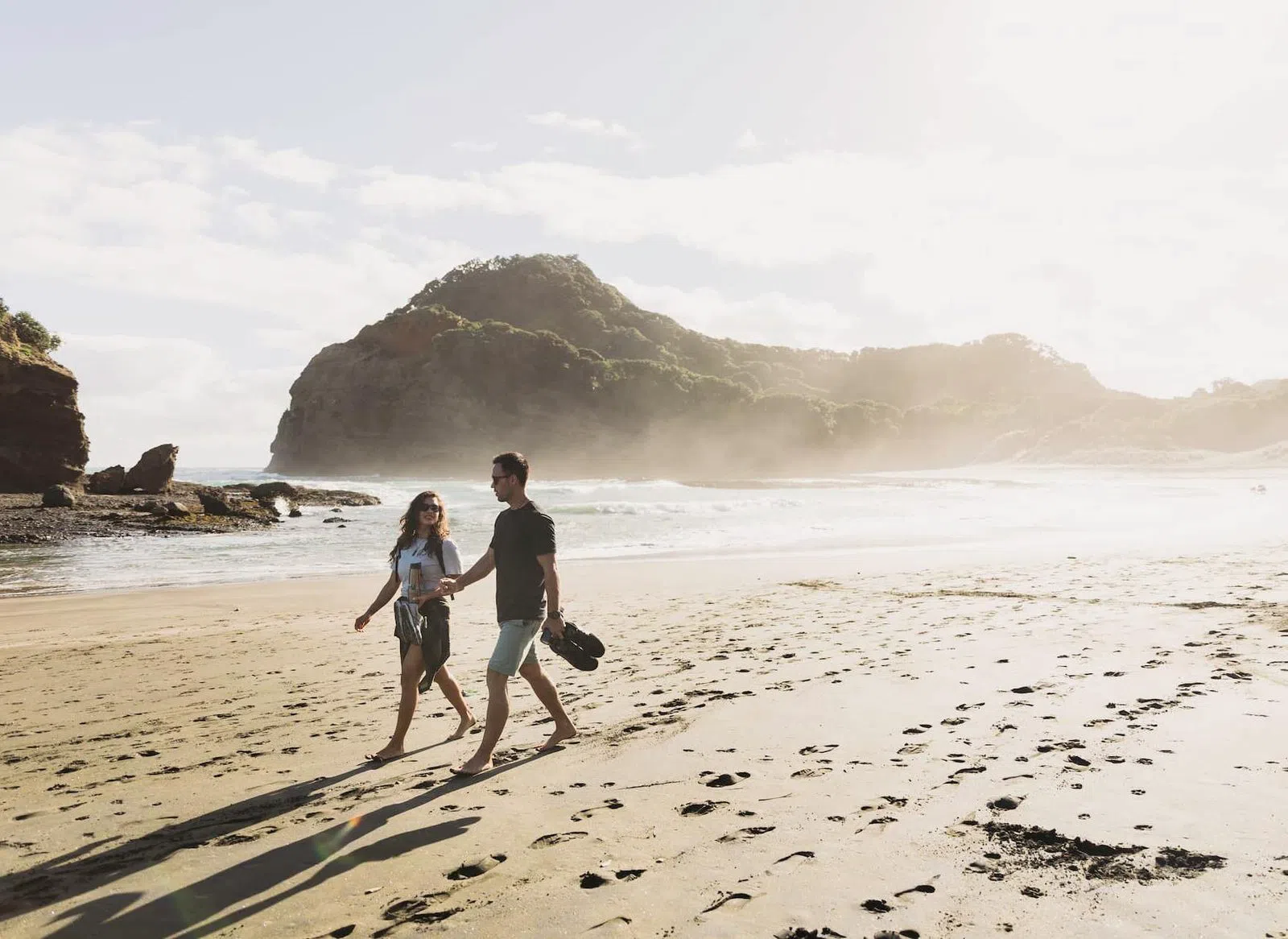
North again, past Muriwai, Bethells Beach, known in Māori as Te Henga, is arguably the most varied single stop on the entire coast, combining dunes, a lagoon, and wetland within one accessible site. The road is sealed the whole way to the car park, which makes it manageable for groups, though it is worth being clear-eyed that there is no day-tripping infrastructure here — no café, no shop, nothing beyond the landscape itself. It is open through 2026, with lifeguards on duty seasonally only, so outside summer this is very much a swim-at-your-own-judgement stretch of coast.
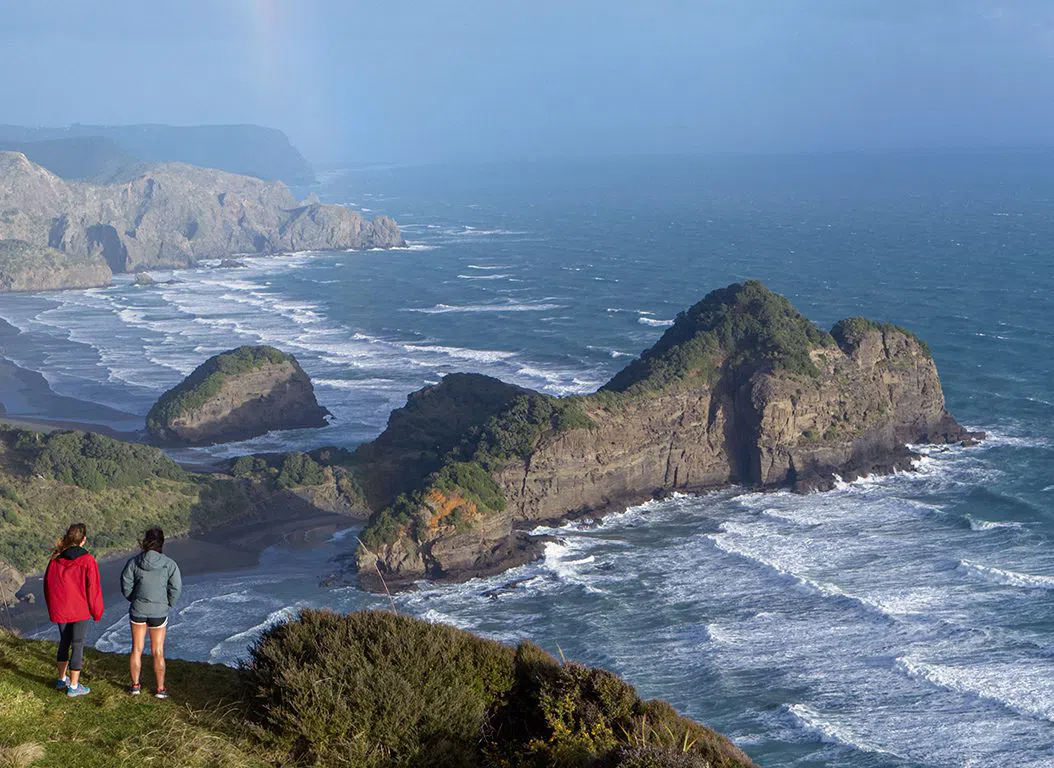
Two kilometres inland from the beach car park, Lake Wainamu is reached by a walking track across black dunes that feels, quite genuinely, like a different landscape from the coast just behind it — sand giving way to a freshwater lake ringed by scrub. The track is fine for groups, but parking at the trailhead is very limited and fills early on weekends through 2026, so this is one spot where arriving before mid-morning genuinely matters. The Te Henga Walkway, the coastal track that once ran unbroken between Bethells and Muriwai, was permanently split by cliff collapses in 2023 into two separate out-and-back legs — Muriwai to Tirikohua Point, and Bethells to O'Neill Bay — both of which remain open and verified for 2026. Treat them as two distinct half-day walks rather than one continuous route, since the connecting section no longer exists.
The Far Edge: Whatipū and Anawhata
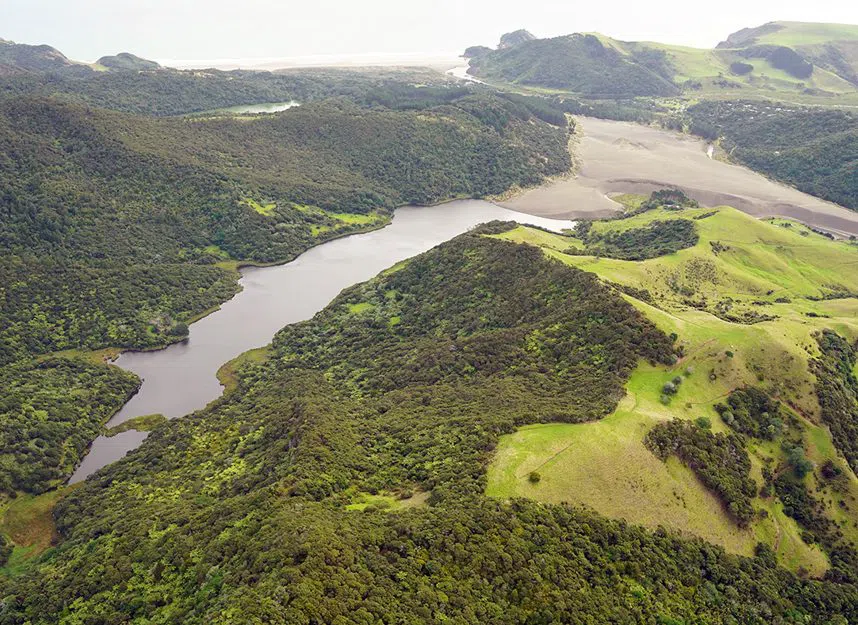
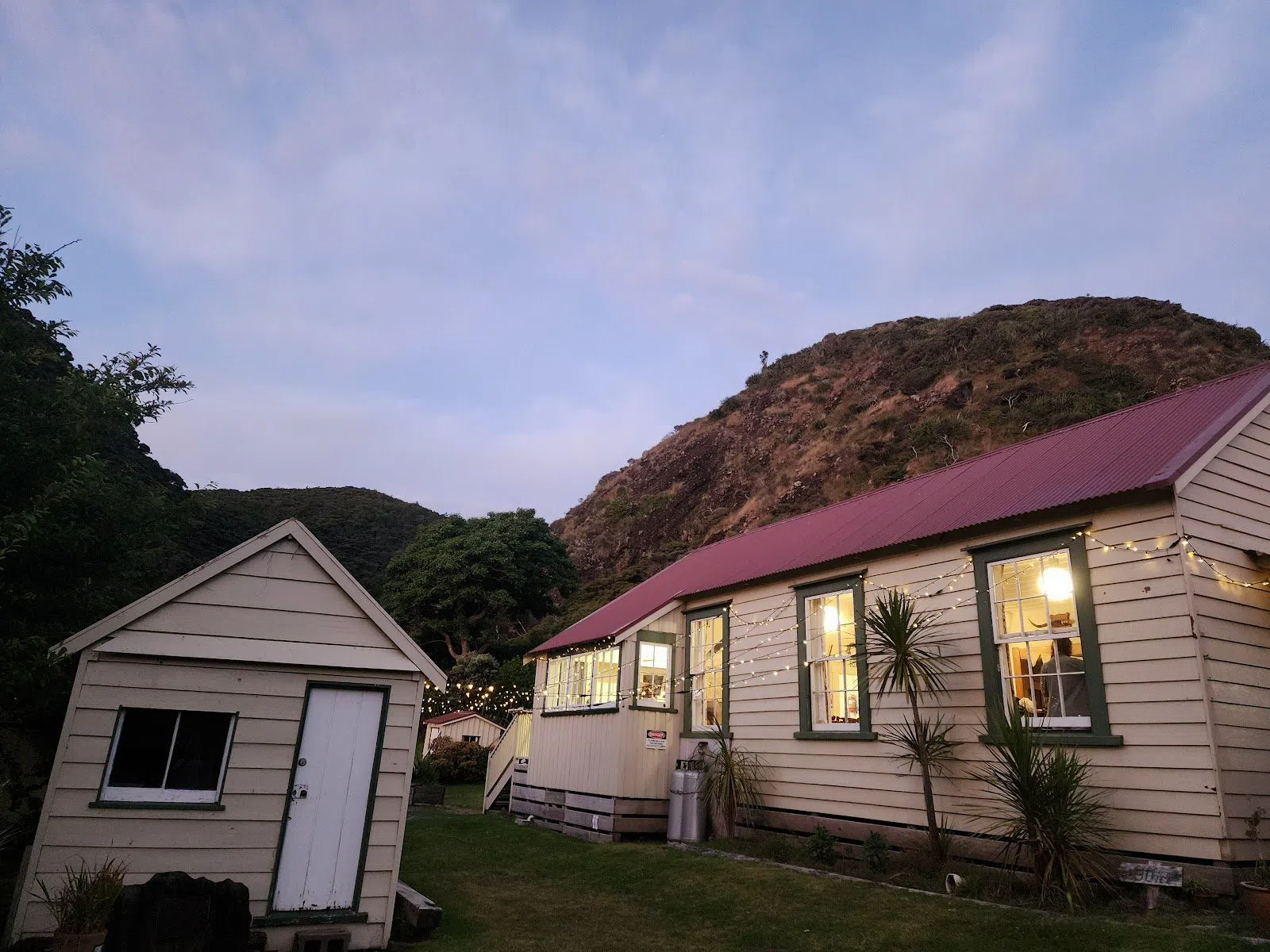
South of Karekare, the sealed road runs out, and the character of the coast changes with it. Whatipū Beach sits at the end of ten kilometres of gravel road, which limits it to smaller groups rather than large coaches, but rewards the drive with genuine solitude, glow-worm caves, and the remains of a former sawmill settlement. It is open, free, and verified for 2026, and it is the closest this coast comes to feeling truly remote while still being reachable by car. For groups wanting to stay overnight, Whatipu Lodge & Campground is the only proper group-camping base on this stretch, welcoming multi-tent parties and group bookings, with rates of NZ$12.50 for adults, NZ$8 for children, and NZ$5 for day visitors; it was connected to filtered drinking water for the first time in February 2026, which removes what used to be the main practical objection to staying there. Book ahead for long weekends and school holidays, since space is genuinely finite.
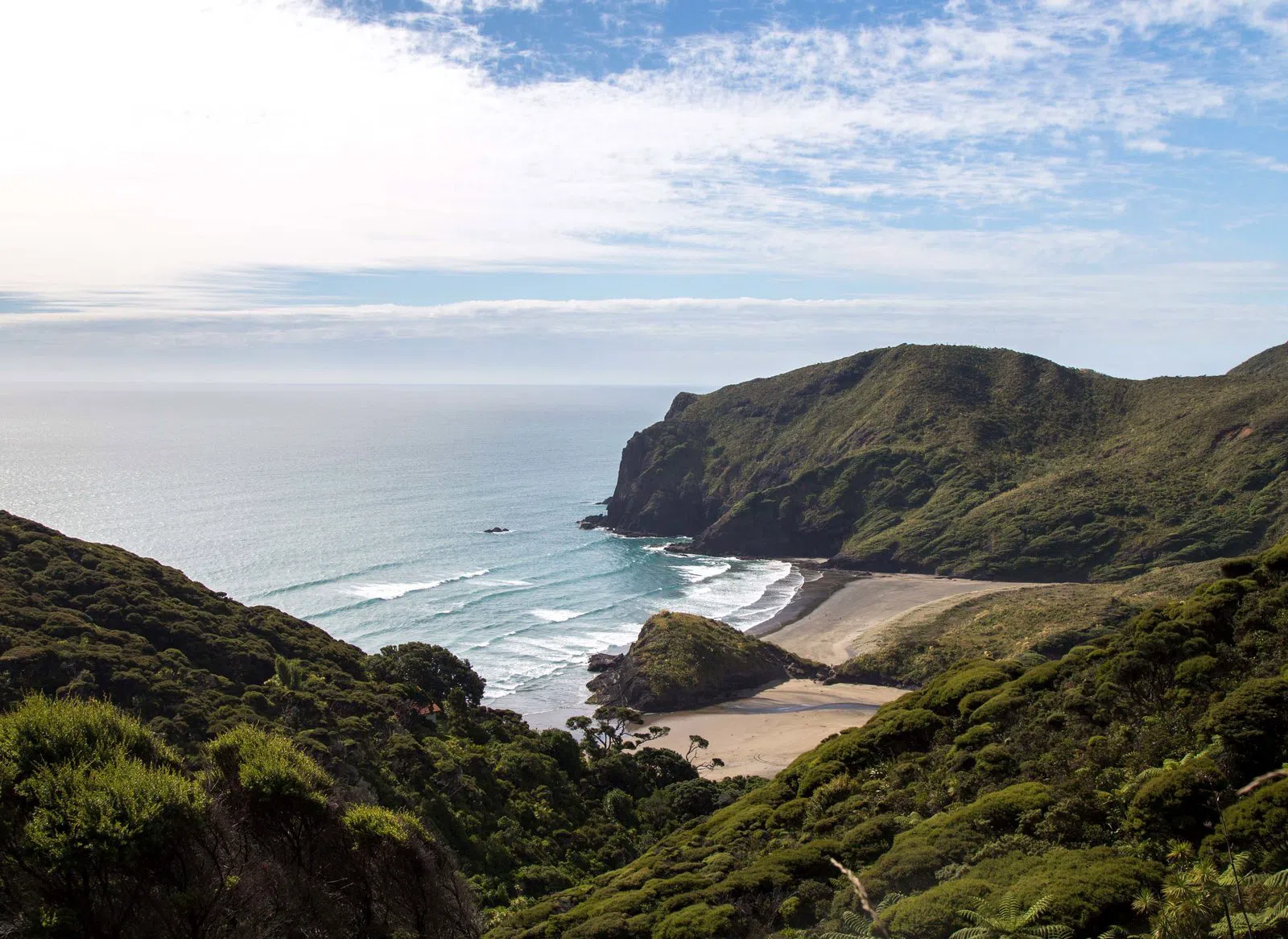
Further north, tucked between Karekare and Bethells, Anawhata Beach is the one nobody photographs, and that is largely by design: a ten-kilometre gravel road followed by a twenty-minute walk-in keeps numbers naturally low and rules it out for large coach parties entirely. There are no lifeguards, so this is a beach for confident, careful swimmers rather than a family paddle, but for travellers who have already done Piha and Muriwai and want somewhere with genuinely no one else on it, this is where to go. It remains open and verified for 2026.
Getting There, Timing It Right, and What to Bring
The west coast beaches are best reached by rental car; none of them sit on a frequent public transport route, and the roads in — narrow, winding, occasionally single-lane near Whatipū and Anawhata — reward unhurried driving rather than a rush. From central Auckland, allow 40 minutes to Piha or Muriwai, closer to an hour for Karekare, Bethells, or Whatipū, and budget extra time on weekends when the Piha and Muriwai car parks fill by late morning in summer. New Zealand's currency is the New Zealand dollar, and while card payments are near-universal at the surf school, horse treks, and Piha's café, it is worth carrying a little cash for the campground's day-visitor fee and any roadside stalls.
Summer (December to March) brings the warmest water and the busiest car parks; the shoulder months of October, November, and April offer quieter beaches, cooler water, and — around Muriwai — still-active gannet viewing. None of the beaches themselves charge admission, so a day exploring two or three of them costs little beyond fuel, food, and any activity booked directly, such as the Muriwai surf lesson or horse trek. The one constant worth repeating: this coast's rip currents are real and have caused fatalities, so swim only at patrolled beaches within the flagged area during patrol hours, and treat the unpatrolled beaches — Karekare outside flag hours, Bethells off-season, Whatipū, and Anawhata — as places to admire from the sand rather than to swim carelessly. Mobile signal is patchy or absent at Whatipū, Anawhata, and much of Bethells, so it is worth telling someone your plan and downloading any maps before leaving the city, rather than relying on a connection you may not have. A packed lunch is sensible everywhere except Piha and Muriwai, since neither Karekare, Bethells, Whatipū nor Anawhata has anywhere to buy food. Anyone basing a trip here should look at the Auckland hotel search for a stay central enough to reach the coast within the hour, and the wider Auckland guide for how these beaches fit into a longer visit.
Before you go
Which black-sand beach is best for a first visit to Auckland's west coast?
Muriwai is the easiest starting point: it has the largest car park, a lifeguard-run surf school, the gannet colony, and horse treks all in one bay, so it copes well with limited time and works for solo travellers, couples and groups alike. Piha is a close second if you want the Lion Rock scenery and a village to eat in afterwards.
Are these beaches safe for swimming?
Only within the flagged, lifeguard-patrolled areas at Piha and Muriwai, and only during patrol hours, which run through summer 2026. Rip currents on this coast are genuinely dangerous and have caused fatalities, so beaches without regular patrols — Karekare outside flag hours, Bethells off-season, Whatipū and Anawhata — should be treated as places to admire rather than swim carelessly.
Can I visit Piha and Muriwai without a car?
It is difficult. None of the west coast beaches sit on a frequent public transport route, and the roads in are narrow and winding, so a rental car is the practical way to reach any of them, with roughly 40 minutes to Piha or Muriwai and closer to an hour to Karekare, Bethells or Whatipū from central Auckland.
When is the best time to see the gannets at Muriwai?
Roughly October to March, when the colony at Ōtakamiro Point is in residence; the free viewing platforms are open 24 hours year-round, but the birds largely disperse out to sea for the rest of the year, so a winter visit will find the platforms with little to see.
Which of these beaches suits large tour or coach groups, and which don't?
Piha and Muriwai have large car parks and handle coach groups comfortably. Karekare's small car park limits it to independent groups of moderate size, Whatipū's gravel access road rules out large coaches, and Anawhata's twenty-minute walk-in keeps it to small parties only — plan group logistics around parking and access, not just beach size.