The Auckland issue
Thirty-Five Minutes to Another Country: Waiheke Island from Auckland
A calm, honest field guide to Waiheke's vineyards, tables and thrills — how to plan the crossing, which places suit couples and which suit a crowd, and what a day really costs.

By Tomás FerreiraAuckland by cone, coast and neighbourhood
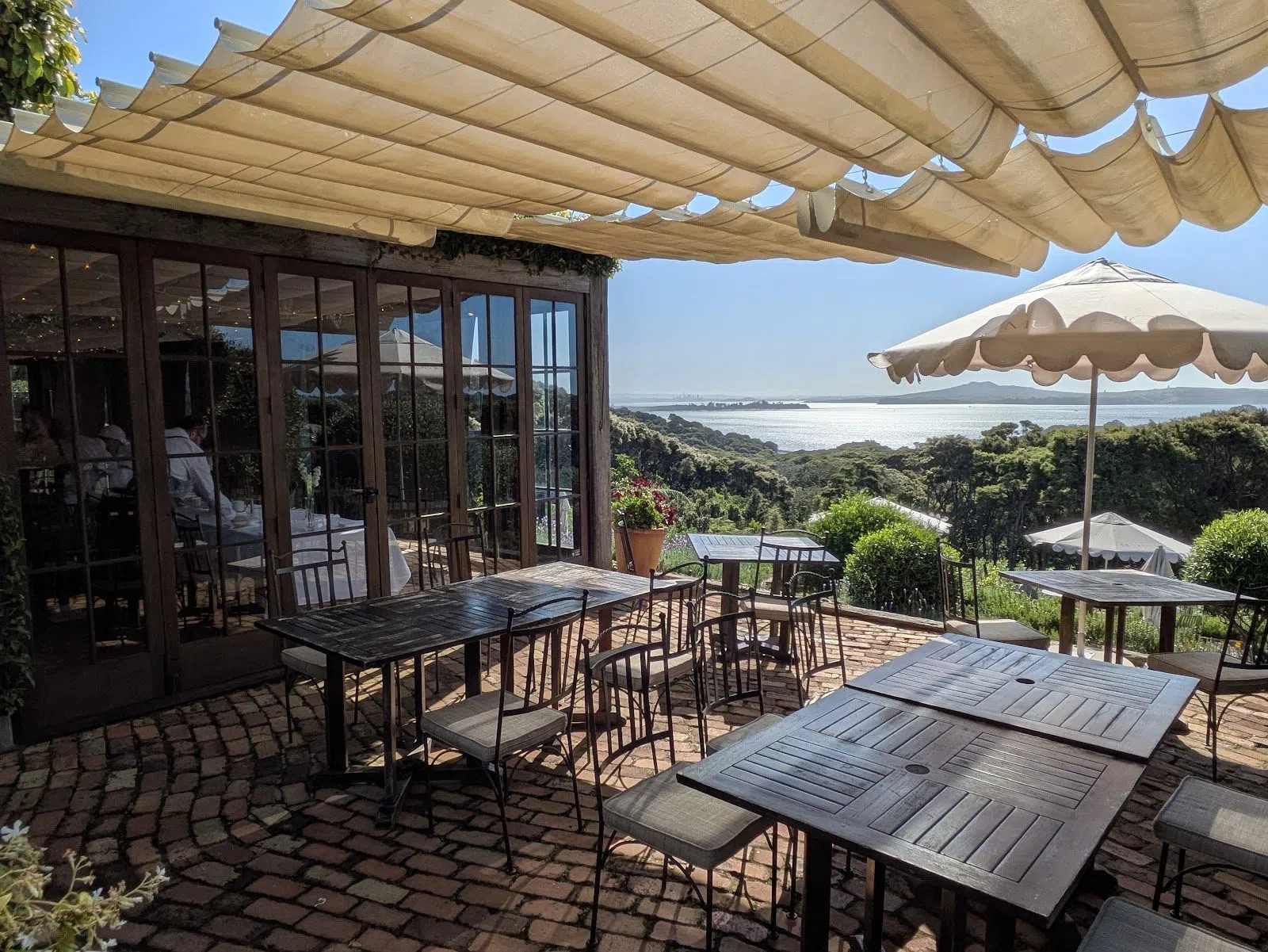
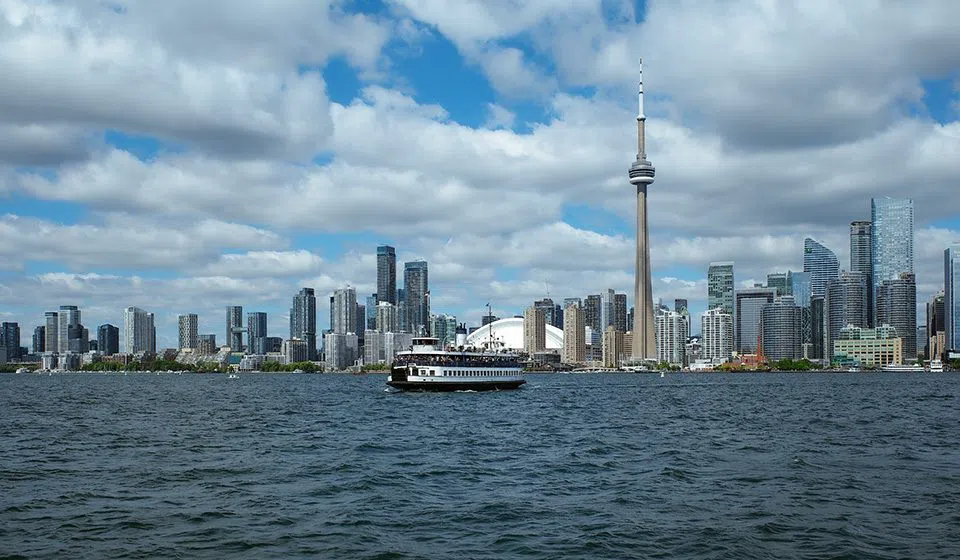
The ferry pulls away from the downtown terminal and within a few minutes the city has rearranged itself into something seen from the water — glass towers, the harbour bridge, the old volcanic cones softening into green behind them. Thirty-five to forty minutes later you step onto a wharf where the traffic thins, the light seems to run longer across the hills, and the slopes are stitched with vines. Waiheke is close enough to reach on a whim and far enough that the crossing feels like a genuine change of country rather than a suburb reached by boat.
What follows is a plan for the day, grouped the way a first-time visitor actually moves across the island: the crossing, the vineyards on the first hill above the wharf, the quieter wine heartland inland, the places for people who don't want to spend the day tasting, the long detour to the eastern end, and the operators who will do the driving so you don't have to. Every venue named here has been checked as trading in 2026; a few carry seasonal quirks worth knowing before you commit a booking.
The crossing is half the trip
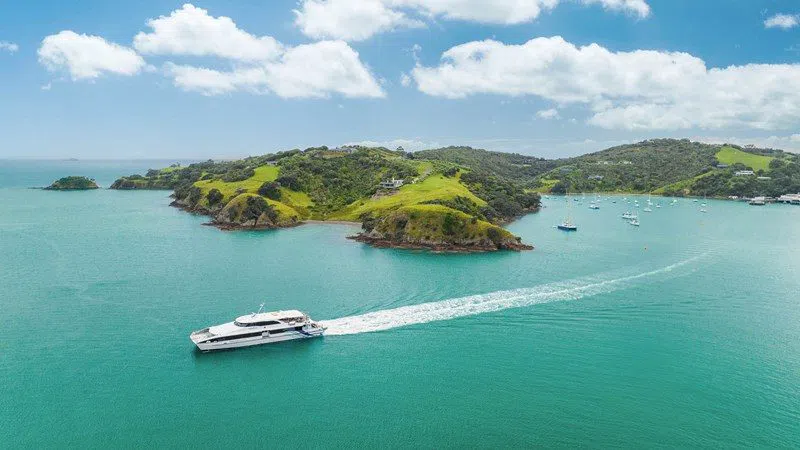
Almost everyone arrives the same way, on the Fullers360 ferry (Downtown Ferry Terminal, on Auckland's waterfront). The passenger crossing takes roughly forty minutes, sailings run frequently through the day, and an adult return costs about NZ$46–59, with off-peak fares at the lower end. Groups are handled without fuss, and you can add a hop-on-hop-off island bus pass, which is the cheapest sensible way to move between the villages once you land at Matiatia.
Buy a return before you board and give the timetable a real look, because the island's last sailings matter more than the first. There is no dense pool of rideshare cars waiting on the other side; your options ashore are the bus, a pre-booked tour van, or a local taxi. That shapes the whole day, and it is worth deciding before you leave whether you want to drive at all — Waiheke's roads are narrow, the tasting rooms pour generously, and New Zealand's drink-drive enforcement is not lenient. The forty minutes on the water, for what it is worth, is not dead time to be endured. It is arguably the best part of the outing, and a seat on the open upper deck is the one to aim for.
Plan your Auckland trip
Live prices from our booking partners.
Free cancellation on many rooms. We may earn a commission when you book.
The first hill: the postcard vineyards above Matiatia
From the Matiatia wharf the land rises straight away, and within a short drive you reach the cluster of names most people picture when they think of Waiheke at all.
Mudbrick Vineyard & Restaurant (on the hill above Matiatia) is the one that launched a thousand photographs. The draw is the outlook — the city sitting low across the water — and the estate leans into it with a large restaurant, dedicated events and wedding spaces, and a cellar door where tastings start at around NZ$30 for four wines. It takes groups readily, which is precisely why the restaurant fills; mains are priced at the premium end, and a table on a summer weekend needs booking well in advance. Come for the view and the occasion, and understand that you are paying for both.
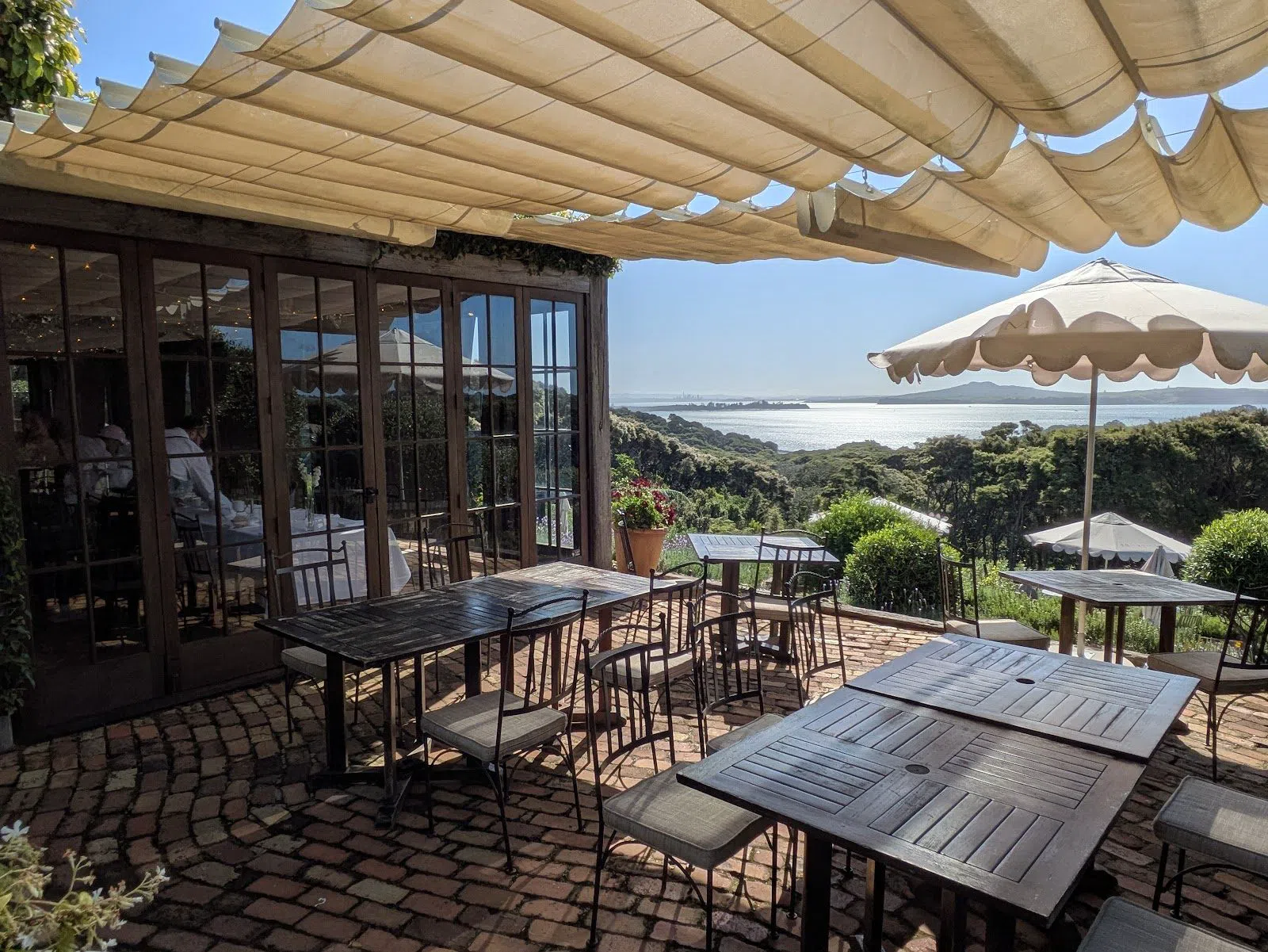
A few minutes on, Cable Bay Vineyards (Church Bay, above Oneroa) offers a comparable sweep of gulf and city in a more contemporary, architectural register. It gives you three ways in: a cellar door tasting, The Verandah for casual sharing plates and wood-fired pizza, and a formal Dining Room at the top of the price ladder. It stays open late on Friday and Saturday. For a relaxed group that would rather not commit to fine dining and a fine-dining bill, The Verandah is the honest choice, and no less scenic for it.
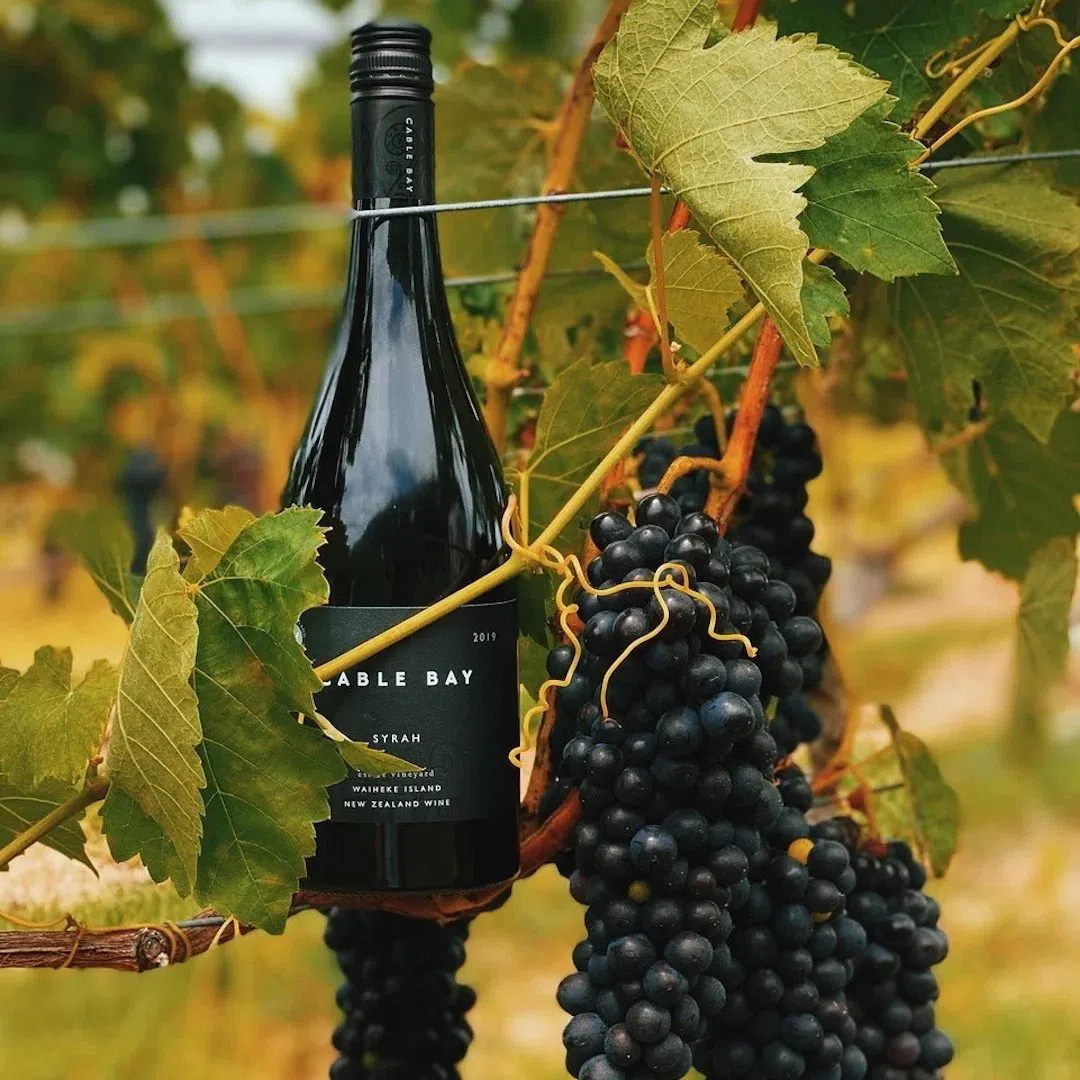
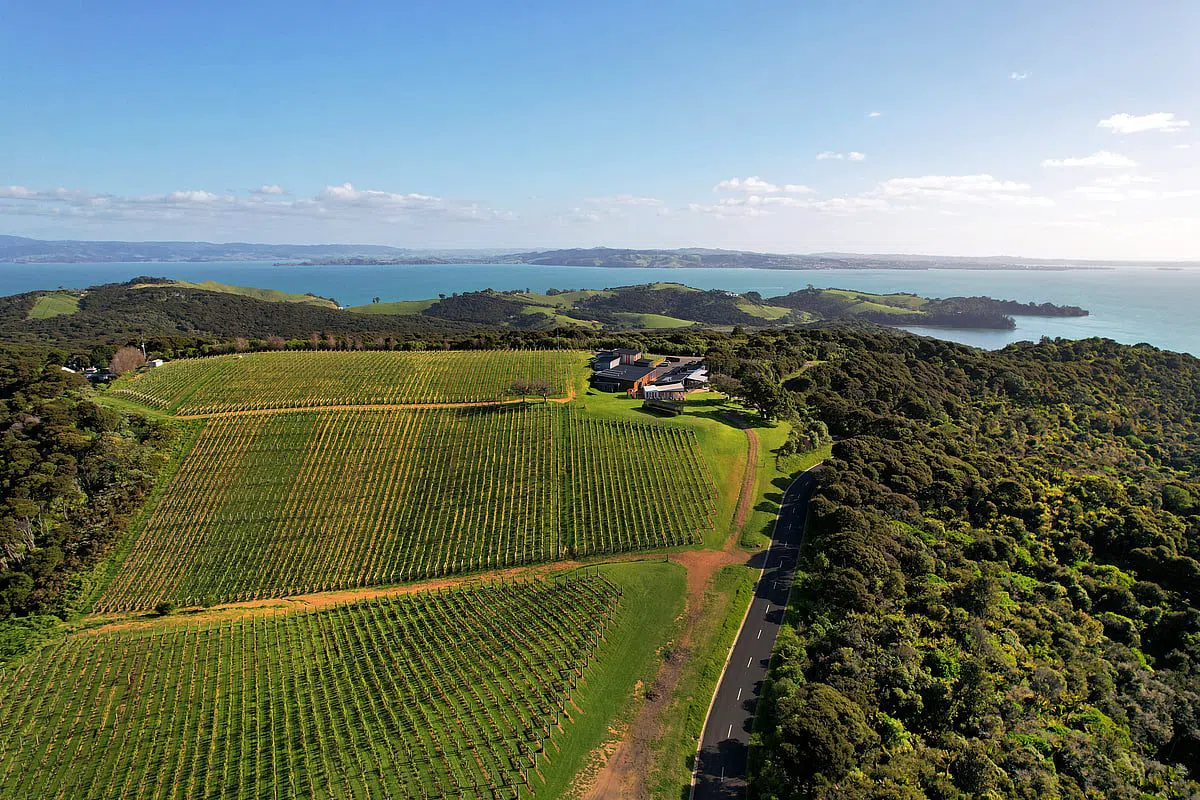
Higher still sits Batch Winery (at the island's high point), a boutique operation with a destination restaurant and long views but noticeably fewer crowds than the busier names below. It is small, though it does take groups, and a booking is wise. Prices sit a rung below the marquee estates, which makes it a good pick for people who want the panorama without the queue.
If chasing vineyards feels like too much choreography, walk into Oneroa village itself for The Oyster Inn (Oneroa). Josh Emett's beachside bistro is open seven days, seafood-led, with oysters as the signature and a bar that hums by midday. It takes groups but genuinely needs a reservation in summer. This is the play when you would rather anchor in one walkable village — oysters, something sparkling, a table by the water — than shuttle between cellar doors all afternoon.
The wine heartland: inland toward Onetangi
Push inland and east toward the Onetangi valley and the mood shifts from view-first to wine-first. These are the stops for people who came for what is in the glass.
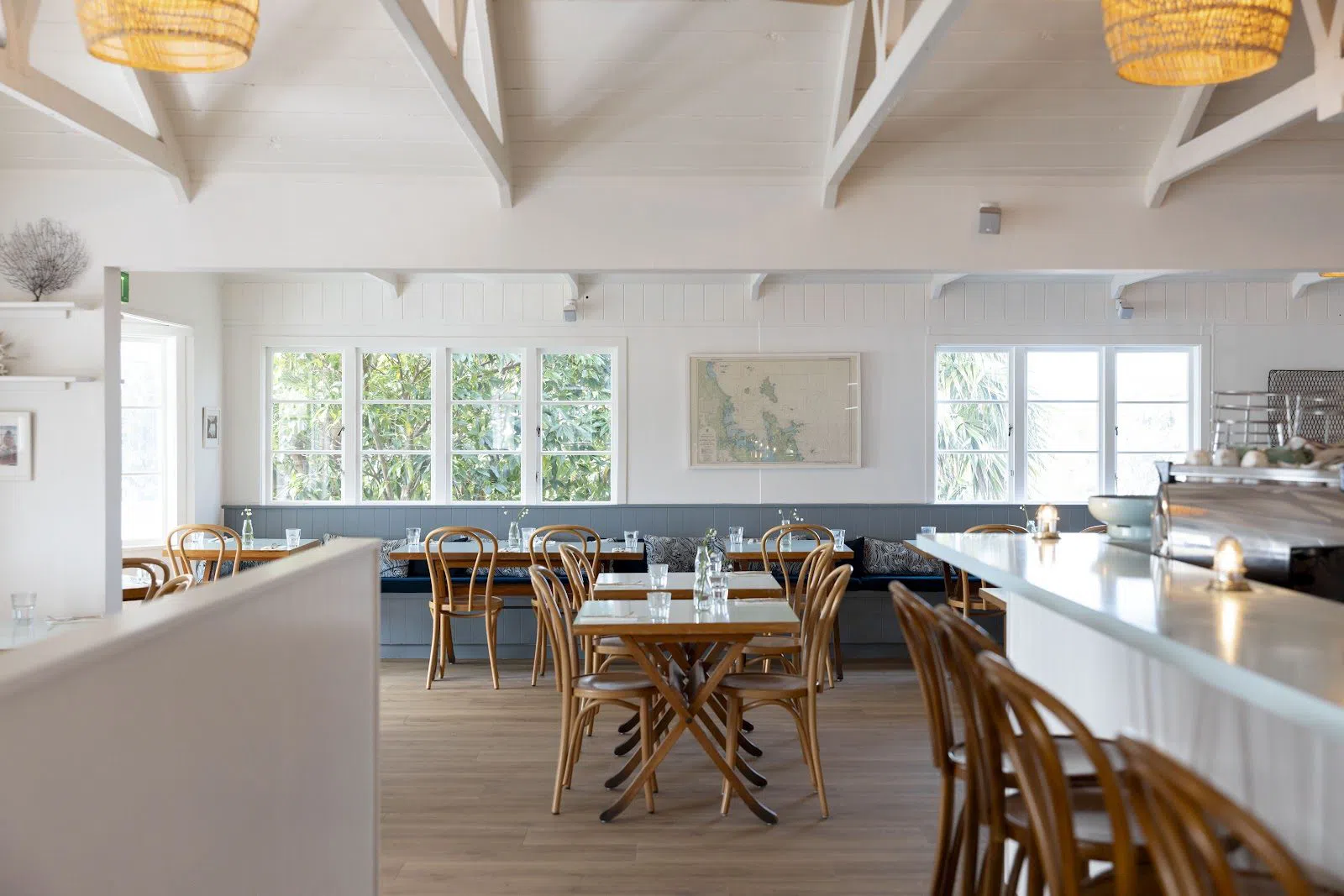
Stonyridge Vineyard (Onetangi) is the pilgrimage. Open daily 11am–5pm, with a cellar door and the Veranda Café and a laid-back courtyard rather than a cliff-edge terrace, it is the home of Larose — one of New Zealand's most celebrated red blends, built from the classic claret grapes of Cabernet Sauvignon and Merlot and their relatives. The flagship reds are collector-priced, and the estate sits at the top end accordingly; larger bookings should be arranged ahead. You come here for the seriousness of the wine and the ease of the courtyard, not for a postcard outlook.
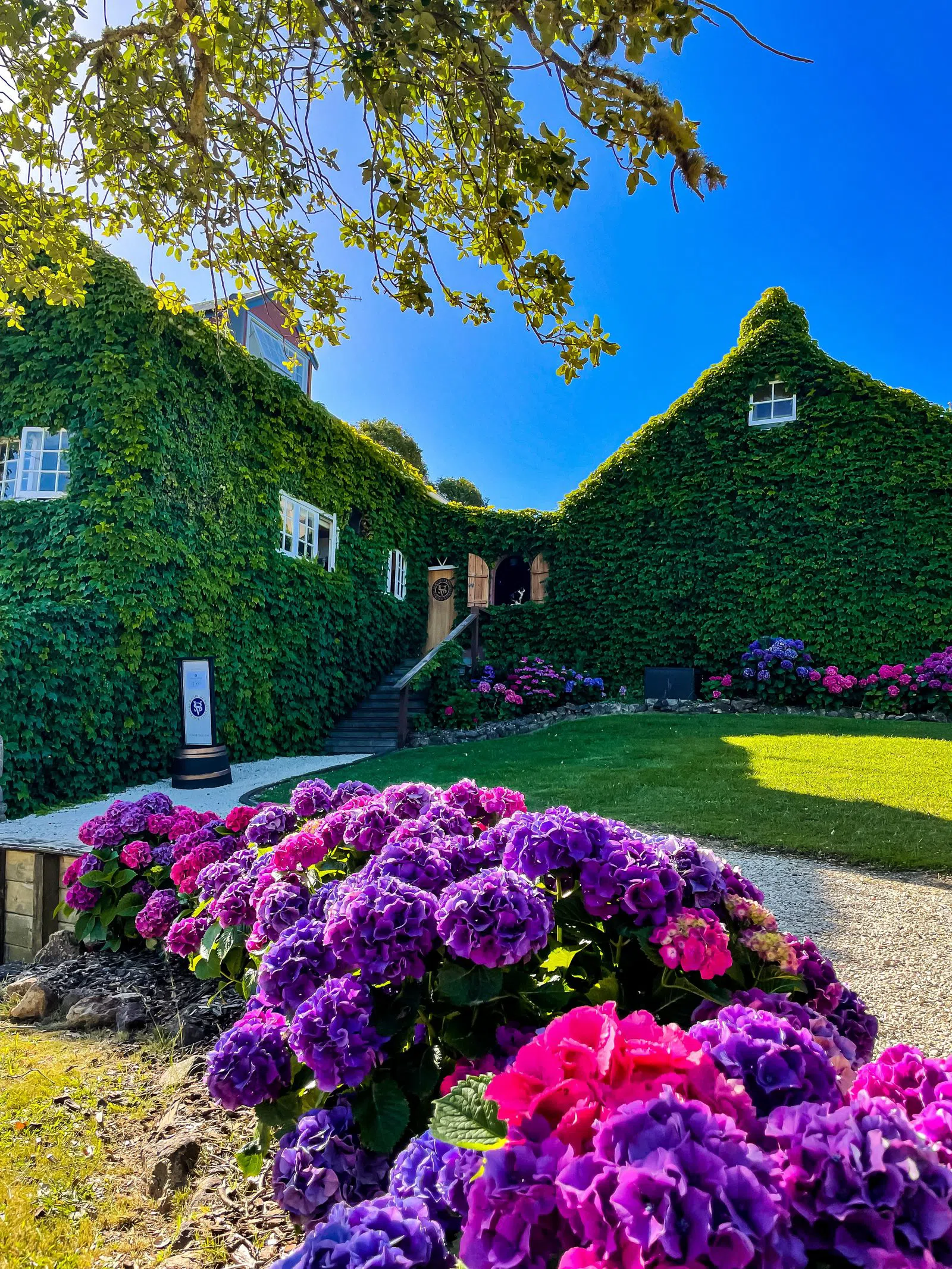
A short way on, Tantalus Estate & Alibi Brewing Co. (Onetangi) solves the perennial problem of the group where not everyone drinks wine. Here a wine cellar door and a working craft brewery share one roof, alongside a restaurant, and the cellar door is open seven days within Alibi Brewing. One caution to diarise: the restaurant closes for winter, roughly mid-July to early September, so if you are planning a 2026 visit in that window, confirm before you build a lunch around it. The tastings sit mid-range; the restaurant runs premium.

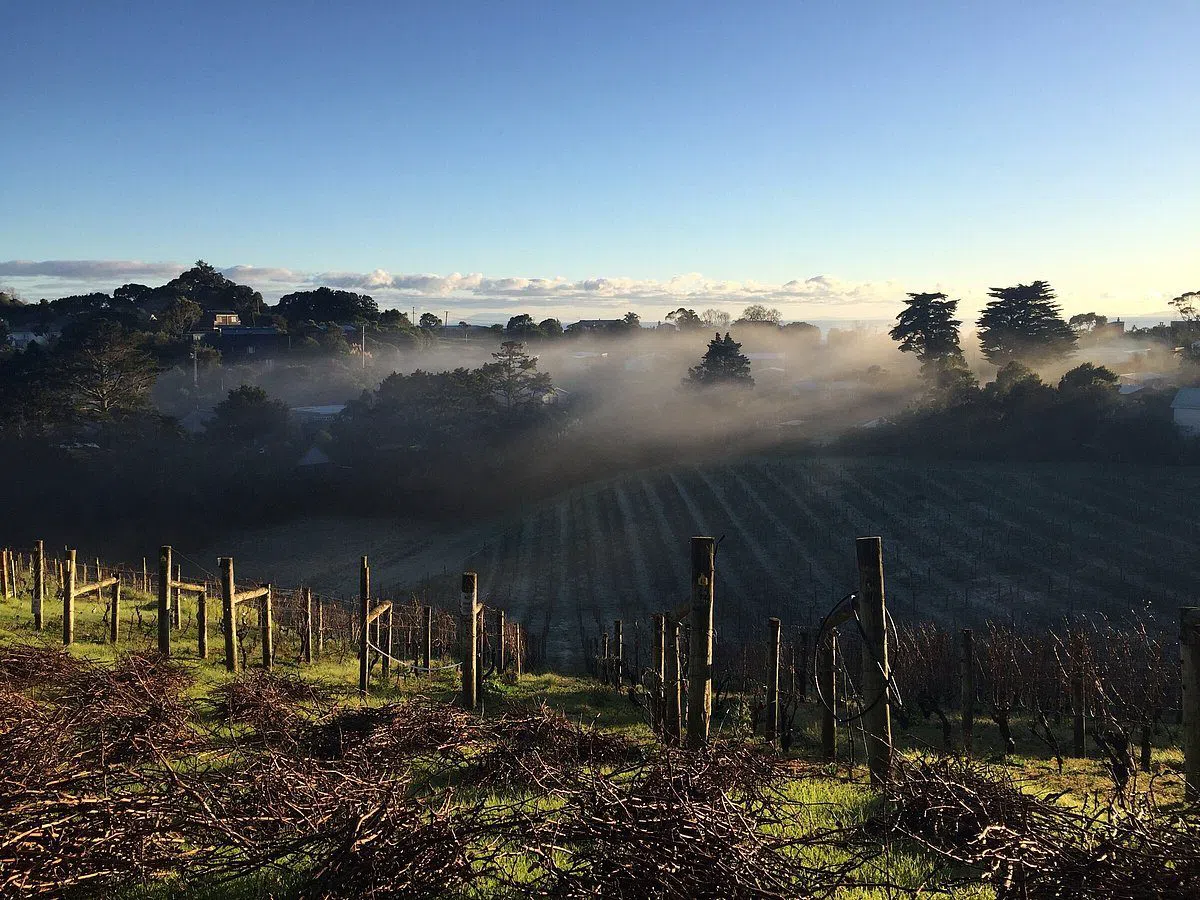
Casita Miro Vineyard (Onetangi) is the island's most theatrical setting — Spanish-style tapas served amid a fantastical mosaic garden that is a destination in its own right. Cellar-door tastings run on weekends, with weekday tastings taken through the restaurant, and the tapas sharing format suits a group well. It is not a stand-up tasting bar and shouldn't be treated as one; bookings are essential, and the point is to sit, share and linger over an afternoon rather than tick off a pour and move on.
For depth over speed, Peacock Sky Vineyard (Ostend) runs small, reservation-only seated degustation tastings, food-paired and guided, daily from noon to 5pm. This is the antithesis of the drop-in cellar door: you cannot walk in, and it works best for couples or small groups rather than a large party. If you want one considered, unhurried experience where someone talks you through each wine and its pairing, this is where to spend the time.
When wine isn't the whole point
Not every visitor wants six tastings in an afternoon, and Waiheke has answers for the ones who don't.
Wild Estate, trading as Wild on Waiheke (Onetangi), is the island's default for groups and stag- or hen-style days. Alongside a restaurant and an onsite brewery geared for large parties, it runs archery, laser claybird shooting and team-building — activities per person, food kept casual with pizzas, burgers and platters, and prices at the friendly end. It is the natural pick when the party wants to do something together rather than simply drink, and it absorbs numbers that would overwhelm a boutique tasting room.

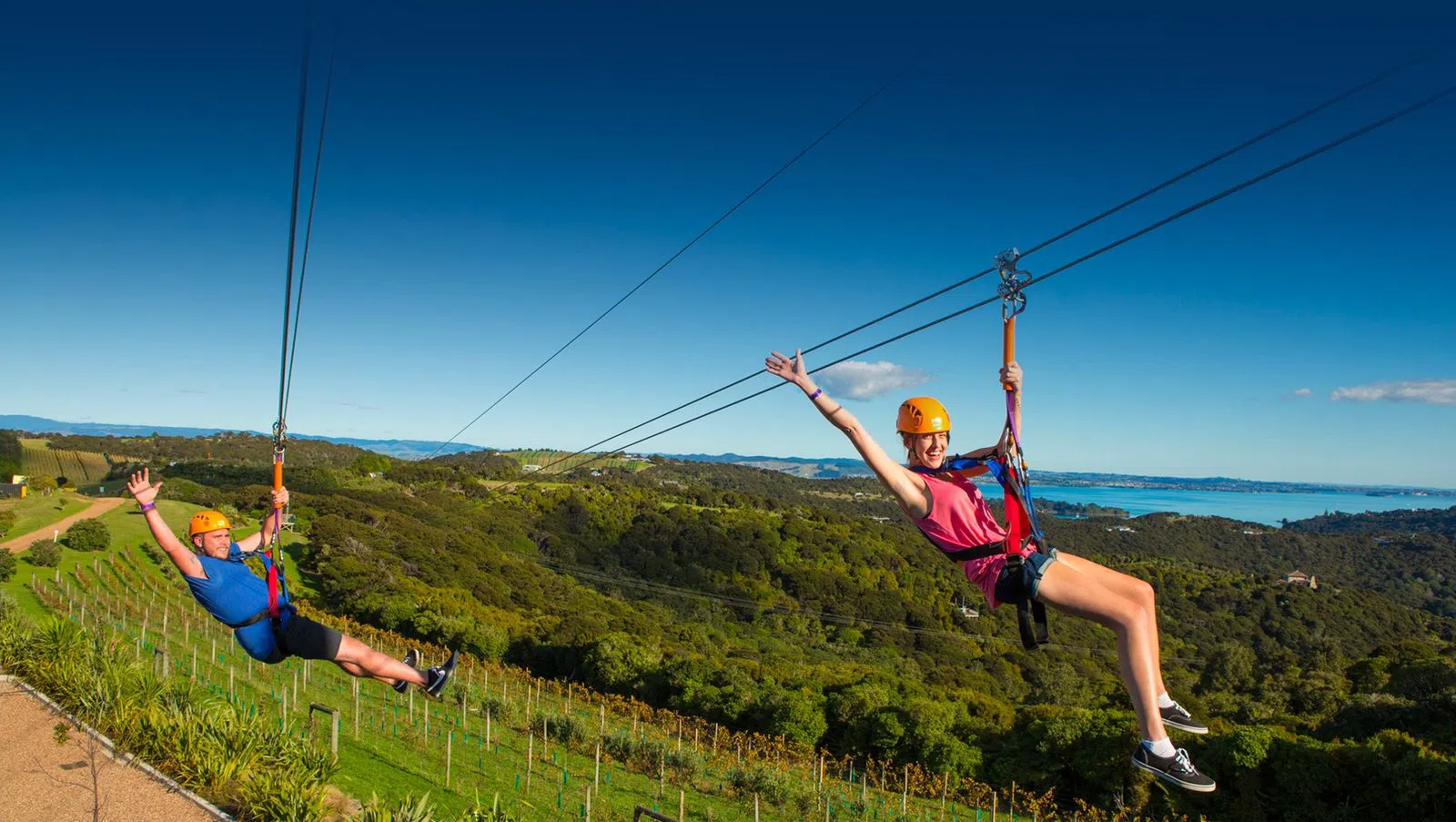
EcoZip Adventures (near Onetangi) is the marquee non-wine thrill: three dual ziplines strung across gulf views, followed by a guided walk through regenerating native forest. It runs daily, and from about NZ$117 including the return ferry and the Matiatia transfer, which quietly makes it one of the easier packages to book if you have no car. Slotted in mid-afternoon, it is a genuine change of pace between tastings — and a better idea before the wine than after it.
The far end: a detour for the committed
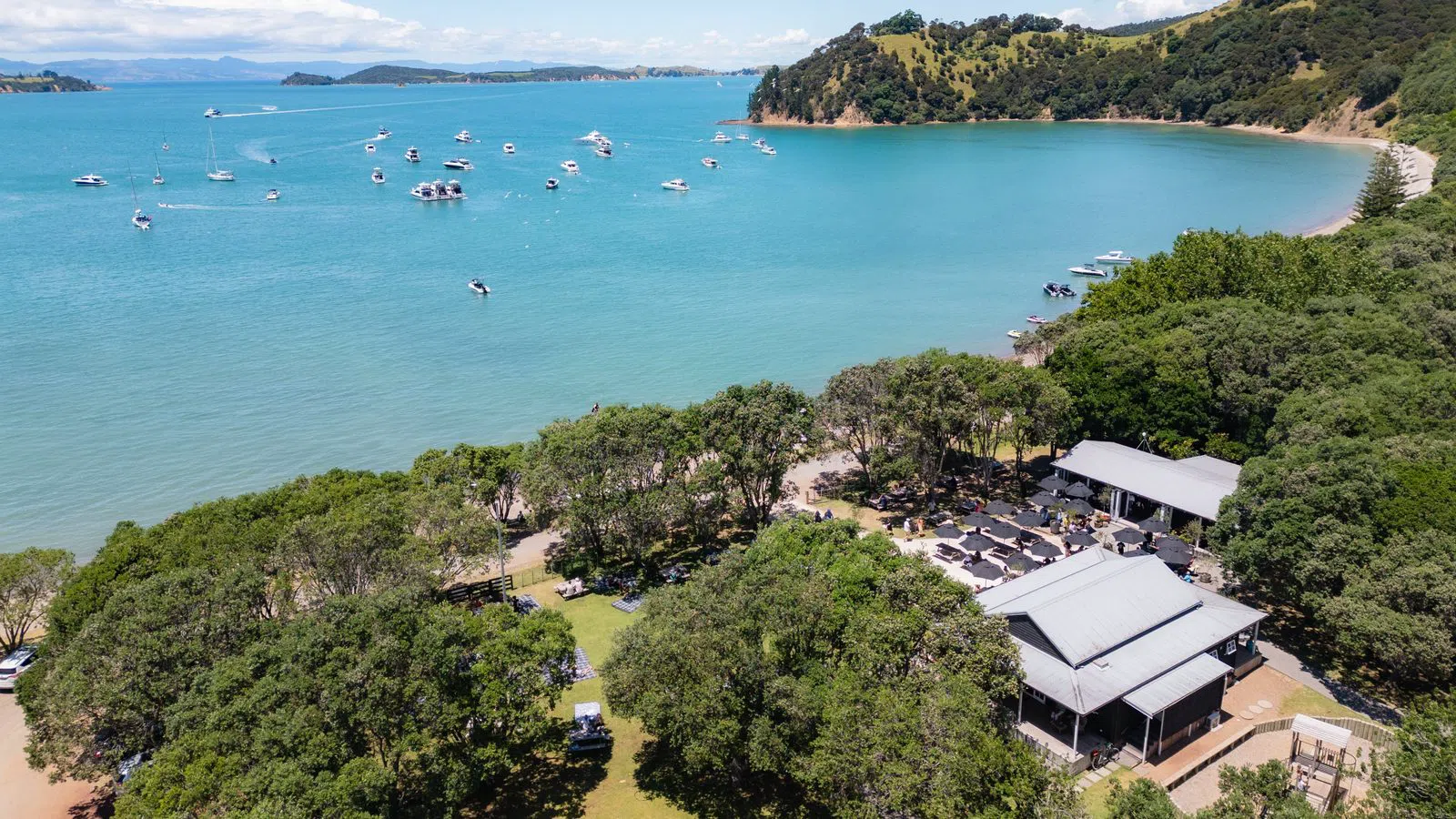
Man O' War Vineyards (Man O' War Bay, on the island's eastern end) is the only winery here that sits literally on the water, pouring tastings and laying out platters at mid-range prices, open daily — 11am to 6pm in summer, 11am to 4pm in winter. The setting is the reward and the catch is the distance: this is a long drive to the far tip of the island, the last stretch on gravel, and it does not fold neatly into a day spent around the Oneroa cluster. Treat it as its own outing, or as the single spectacular stop for people who would rather have one unhurried place on the sea than a checklist of six.
Letting someone else drive
Given the generous pours and the narrow roads, plenty of visitors sensibly hand over the keys, and two operators cover most needs.
Ananda Tours (pickup at Matiatia) is a family-run operator of more than twenty-seven years, running small-group guided food and wine tours with private and bespoke options. Expect curated tastings threaded with local food touches on a relaxed circuit — the choice for people who want a knowledgeable local at the wheel and a bit of depth, rather than a big coach and a rushed loop.
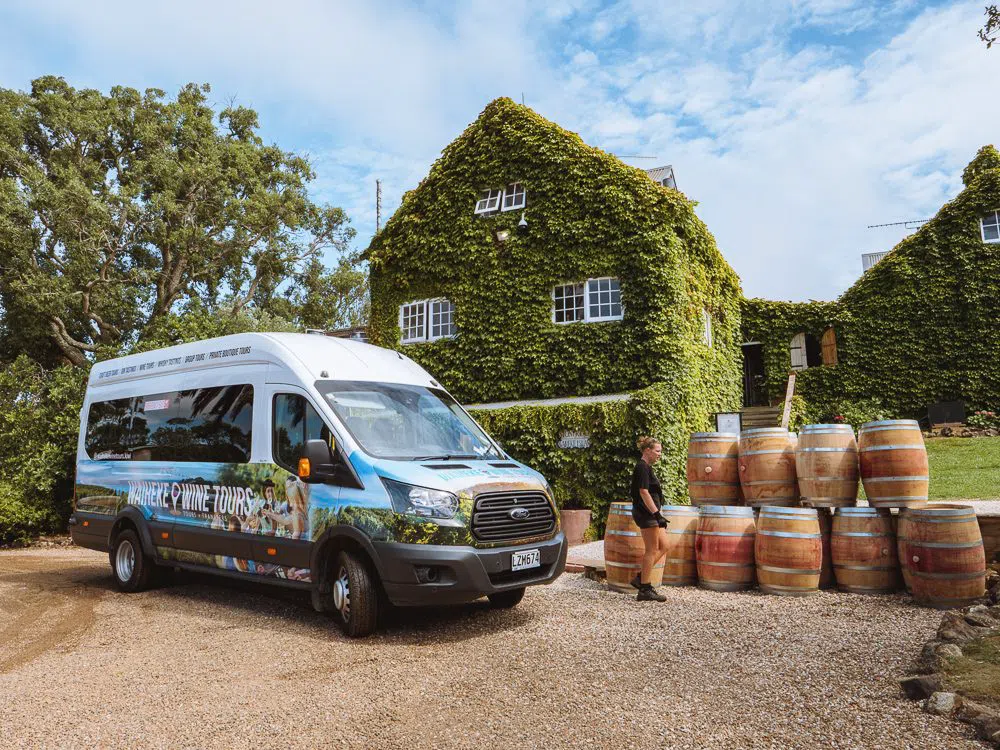
Waiheke Wine Tours Ltd (pickup at Matiatia) is the most flexible on group size, explicitly scaling from a couple to corporate parties of 180 or more, with shared, luxury-private and bespoke formats. Shared tours are mid-range; private and luxury run premium. This is the natural pick when your party is simply too large for the boutique vans.
A plain word on doors and who suits where: the reservation-only and boutique tables — Peacock Sky, Casita Miro, and the Mudbrick restaurant — must be booked, and a large group turning up unannounced will be turned away. Big or mixed parties are best served by Wild on Waiheke, by The Verandah at Cable Bay, or by handing the logistics to Waiheke Wine Tours. Couples and small groups after something quieter should look to Peacock Sky and Batch. Everyone benefits from ringing ahead in summer; almost nothing here is improved by leaving it to chance.
Planning notes: transport, cash, timing, budget
Transport. The ferry return runs about NZ$46–59, and the hop-on-hop-off bus pass is the cheapest way around once ashore. There is no reliable rideshare density; tours collect from Matiatia. If you do drive, mind the drink-drive limits and the gravel out east.
Cash and cards. Cards are accepted everywhere and there is no need to carry much cash. Prices are in New Zealand dollars: tastings from around NZ$30, EcoZip from about NZ$117, and premium mains at Mudbrick, the Cable Bay Dining Room and Stonyridge well above that.
Timing. First ferries leave early and the last returns often run into the evening, but check the 2026 timetable rather than trusting a memory of it. Summer, roughly December to February, is the busy stretch — book restaurants ahead — and remember Tantalus's winter restaurant closure from about mid-July to early September. Two or three venues in a day is realistic and civilised; four becomes a march once travel time is counted.
Budget. A modest self-guided day — return ferry, bus pass, a couple of tastings and a casual lunch — sits comfortably around NZ$120–180 a person. Add a premium restaurant table or a guided tour and NZ$300 and up is easy to reach.
Where to stay. Most people treat Waiheke as a day trip and sleep back on the mainland, so begin your Auckland hotel search near the waterfront to be minutes from the Downtown terminal. For everything the city itself asks of your time once the ferry brings you back, our Auckland guide covers where to eat, stay and wander.
Before you go
How do I get from Auckland to Waiheke Island?
Take the Fullers360 passenger ferry from the Downtown Ferry Terminal on Auckland's waterfront. The crossing takes about forty minutes, sailings run frequently through the day, and an adult return costs roughly NZ$46–59, with off-peak fares cheaper. You can add a hop-on-hop-off island bus pass to move between the villages.
Do I need to book vineyards in advance, or can I just turn up?
It depends on the venue. Reservation-only and boutique tables — Peacock Sky, Casita Miro and the Mudbrick restaurant — must be booked ahead, and Peacock Sky can't be walked into at all. Most cellar doors take drop-ins, but any group and any summer weekend needs a booking; ringing ahead is always the safer bet.
Which places on Waiheke suit large groups versus couples?
Large or mixed groups are best served by Wild on Waiheke (activities plus a brewery), The Verandah at Cable Bay, or a Waiheke Wine Tours van, which scales to corporate parties of 180-plus. Couples and small groups wanting something quieter and more considered should look at Peacock Sky's seated degustation and Batch Winery.
Can I visit Waiheke without a car or driving?
Yes. The island bus pass, a booked tour and local taxis all work from Matiatia, and there is no dense rideshare on the island. Operators like Ananda Tours and Waiheke Wine Tours collect from the wharf, and EcoZip's package even bundles the return ferry and transfer — a sensible way to avoid driving after tastings.
How much should I budget for a day on Waiheke in 2026?
A modest self-guided day — return ferry, bus pass, a couple of tastings from around NZ$30, and a casual lunch — sits around NZ$120–180 per person. Add a premium restaurant table or a guided wine tour and NZ$300 or more is easy to reach. All prices are in New Zealand dollars, and cards are accepted everywhere.